BUSAN 2025: Asia Gets Organised; Southeast Asia Stays Busy; Oscars Controversy

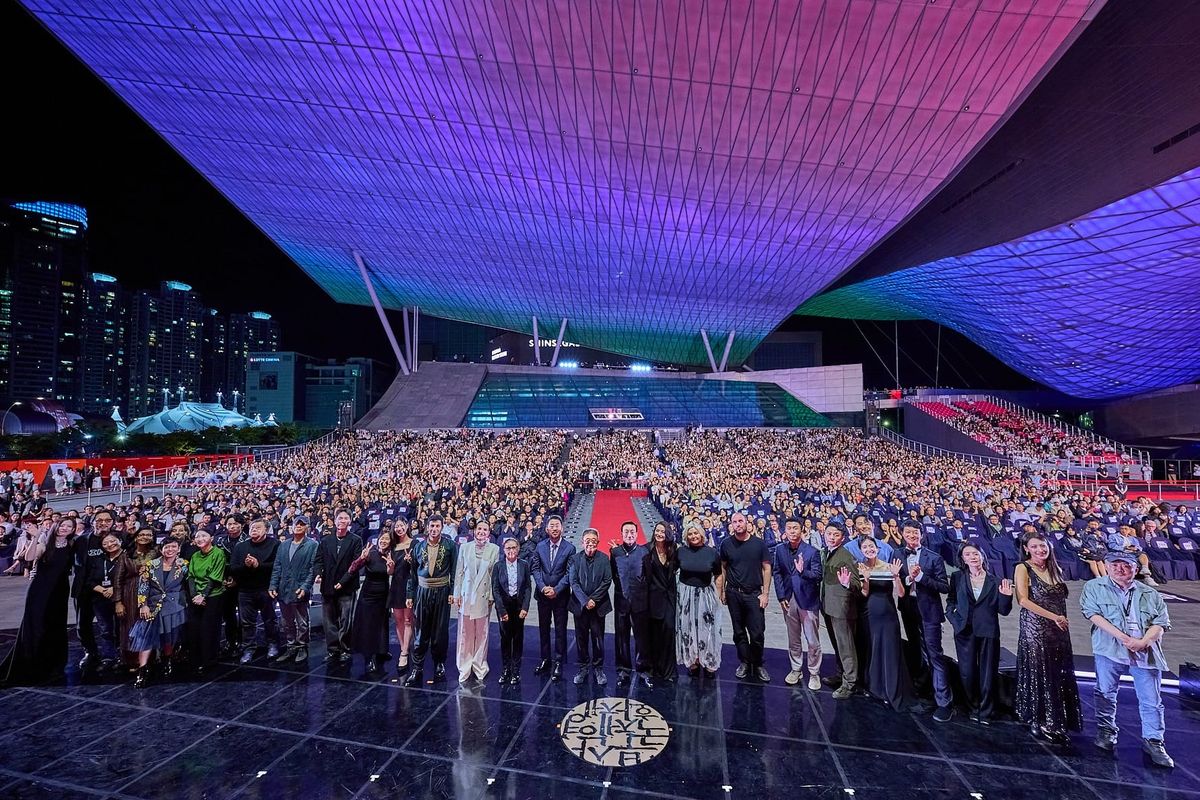
Busan International Film Festival (BIFF) wrapped last Friday, and we’re already nearly at the end of the next festival, China’s Pingyao International Film Festival, but I’ve finally had time to draw breath and share some thoughts from last week. I’ll follow up with Pingyao coverage in the next edition of Streamlined.
Is Asia Starting To Get Organised?
BIFF managed to put on an impressive show for its 30th edition with a long list of Asian stars and auteurs, European talent and Hollywood filmmakers (see wrap story I wrote for Deadline). It had a buzzy opening film, Park Chan-wook’s No Other Choice, which opened top of the Korean box office this past weekend, and two awards ceremonies – the Vision Awards, which recognised Indonesian actor Reza Rahadian’s directing debut On Your Lap, and the main Busan Awards, with winners including Zhang Lu's Gloaming In Luomu and Shu Qi's Girl.
The crisis in the Korean film industry was a big topic of conversation during the festival and its accompanying industry platform, Asian Contents & Film Market (ACFM), with many attendees talking about the ongoing decline in box office and investment. Just recently, there have been a few reasons to feel hopeful, with the Korean government pledging more support, and Korean filmmakers increasing their presence at this year’s autumn film festivals.
But there’s also a growing realisation that it will take a coordinated response from both industry and government policy to plot the Korean film industry’s future direction in what just might be a post-theatrical landscape. I spoke to ACFM director Ellen Y.D. Kim before the market, and published her thoughts more or less verbatim, because there was very little I could add to what she had to say. If you haven’t seen this interview already, it’s an illuminating read.
ACFM was also bustling, drawing a record number of 30,000 visitors, and hosting several new initiatives including tech-related InnoAsia, The A Summit and documentary market Doc Square. Although there’s been a shift away from traditional sales booths to national pavilions, locations, IP and tech-related companies – same as at most other markets – the trade show floor was busy and seminars packed. A few sales deals were announced, but there’s also growing acceptance that this is no longer the kind of news that drives film markets.
What struck me about both BIFF and ACFM is the fact that, despite the current travails of its local industry, South Korea still manages to play a role as a regional leader. BIFF and ACFM have long supported cinema across the region through programmes such as Asian Film Academy, Asian Cinema Fund and Asian Project Market. But ACFM appears to be stepping up its involvement in exploring responses to the current threats and opportunities, not just in Korea but across the rest of Asia as well.
And as Streamlined noted at the end of last year’s BIFF – there certainly needs to be a coordinated response to rapid changes such as the emergence of streaming, continuing inflation, cost-of-living crisis, challenges and opportunities posed by AI, monopoly and media concentration. Europe is tackling all these changes despite facing a political swing to the right in many European Union (EU) member states, not to mention two major wars that are impacting all cultural discourse. But Asia has always lacked the regional political or economic organisations to do the same.
ACFM held two conferences as part of ‘The A Summit’ to look at how Asia can upgrade its data collection resources, and also how film and TV markets (as in the physical events) across the region can cooperate. I moderated the second session with speakers from ACFM, Japan’s TIFFCOM, Hong Kong Filmart, Taiwan Creative Content Fest, Indonesia’s JAFF Market and Red Sea Souk (all headed by strong, capable women). The impression I got is that there’s a will among these events to work together, but they all have different structures and relationships in terms of support from their local governments, which might make collaboration difficult. However, information and experience sharing could be a more realistic starting point.
Asian Film Alliance Network (AFAN) is also attempting to bring together national film bodies from across the region to explore partnerships, policy and information exchange. Again, Korea is playing a pivotal role in the organisation, which was initiated two years ago by the Korean Film Council (KOFIC) and now has members in the Philippines, Taiwan, Singapore, Malaysia, Thailand, Indonesia and Mongolia. Last year, AFAN also partnered with the European Film Agency Directors Association (EFAD) to build collaboration between Asia and Europe.
Obviously these activities are on a much smaller level than the funding and support organisations of the EU, but they are crucial first steps. And they are taking place just as Europe is facing a major overhaul of its funding systems through the new AgoraEU programme, which is replacing Creative Europe, prompting major concern among Europe’s film and TV industries. While Streamlined focuses on content industries outside the US and Europe, both hold interesting lessons for other regions, and an upcoming newsletter will include an easy to digest explainer (once I’ve managed to digest it myself) about what is currently happening in Europe and why.

![Extraordinary Attorney Woo [Photo: ASTORY]](https://storage.ghost.io/c/f6/3b/f63bba50-4e07-4fdb-a685-47f18f3c5b84/content/images/size/w600/format/webp/2026/10/Extraordinay-Attorney-Woo.jpg)