Cannes Recap Part One: Palme d’Ors & Oscars; France’s Bolloré Drama
Quite a few people commented to me that this was a strange year in Cannes. The market was dead for the first few days; kicked into high-gear frenetic meeting activity towards the weekend, then fell silent again in the second week – during which the spotlight belonged to the tech companies. There was a flood of announcements to keep us trade journalists busy, but actual deals didn’t start to materialise until the end of the festival. All this seemed to speak to the huge uncertainty in the market, the spectre of another wave of disruptive tech changes, and the high costs of attending Cannes, which means many people are keeping their trips as short as possible.
And yet so much happened that I’m spreading the analysis over four newsletters. This first one will look at reaction to the Cannes official selection, recent changes to the Oscars submission process and France and the EU’s off-screen dramas. Other newsletters this week will look at updates in various Asian, African and Middle East territories; the sales activity at the market; and what we learned about AI. If you’re not yet subscribing to Streamlined, please consider taking a paid subscription – in addition to Streamlined Insights, you’ll also have access to the Streamlined Guides, containing in-depth territory reports and analysis of funding, tech and other issues impacting the global content industries.
Reaction To Cannes Line-Up, Oscars Submission Process & Rising Costs
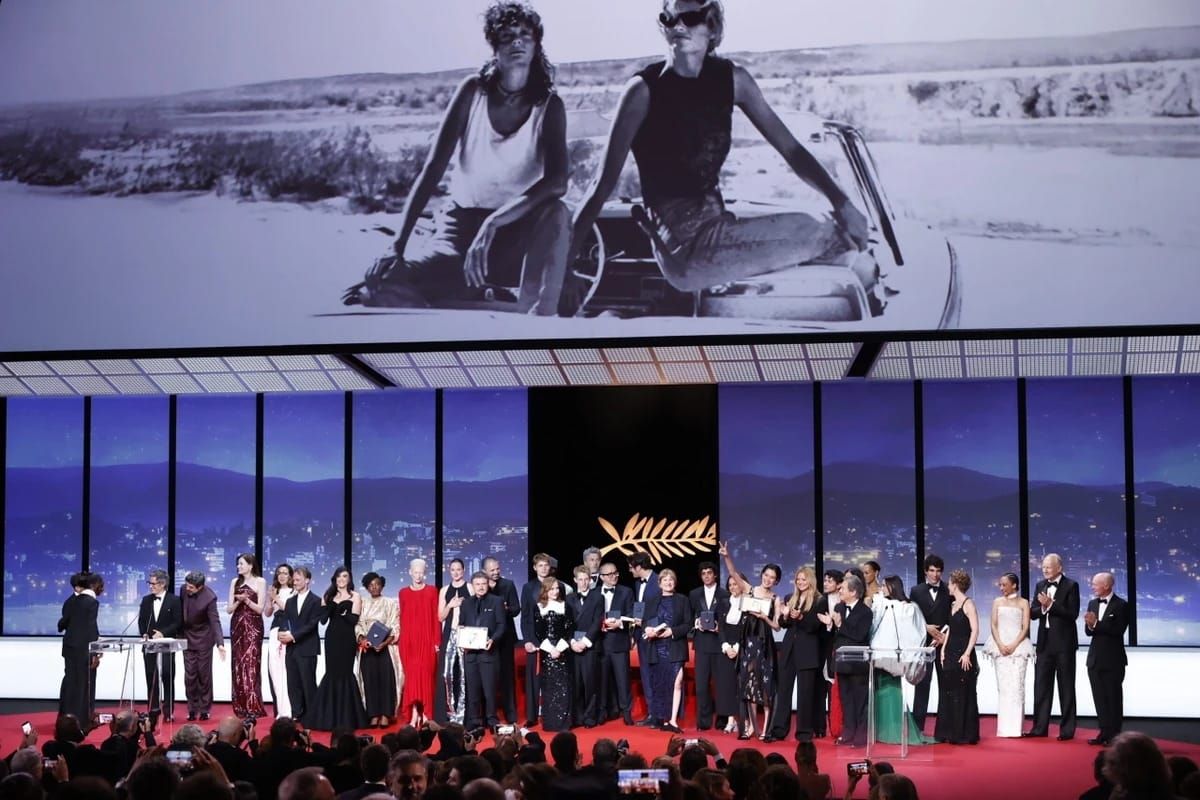
“The trend is audience-friendly auteur films,” said Cannes chief Thierry Fremaux heading into the festival, but while nobody could argue that the line-up included a large number of marquee filmmakers, the critical reaction was muted compared to previous years. The consensus was that many of the competition titles, including Christian Mungiu’s Palme d’Or winner Fjord, were not the directors’ best films. Also among those that failed to excite a notoriously tough critics corps were Asghar Farhadi’s Parallel Tales, Pedro Almodovar’s Bitter Christmas, Hirokazu Kore-eda’s Sheep In The Box and James Gray’s Paper Tiger.
The reaction to Fjord was an interesting test case in its questioning of the moral agendas of so-called progressive societies. Sebastian Stan and Renate Reinsve star in the story of a Romanian Evangelical Christian family living in Norway where their religious approach to child-rearing ends up with their kids being taken into care. This particular clash between West and East, and between progressive and conservative values, has been explored in films before (including 2023 Hindi-language film Mrs Chatterjee vs Norway) but not in so high-profile an arena as Cannes – and the divisive reactions Fjord elicited highlight how indignant the West can become when its values are questioned.
Mungiu made some interesting comments in an interview with The Hollywood Reporter: “I have a great respect for Norway and for the Nordic countries. It’s a very civilized society. They need to be less rigid in understanding that not everybody was so fortunate to reach this level of empathy,” Mungiu said, later adding: “Expressing doubts about our liberal society doesn’t mean for a second that I’m a defender of a conservative society. It means that I trust progressive society more in its capacity for admitting self-criticism.” Thank god that the Cannes film festival at least is one space where these doubts can still be expressed.

Another trend in the Cannes line-up this year – not new, but maybe more noticeable – was the number films from leading filmmakers working outside of their home country: a Romanian director in Norway, Japan’s Ryusuke Hamaguchi in France (Best actress winner All Of A Sudden) and Germany’s Valeska Grisebach in Bulgaria (Jury Prize winner The Dreamed Adventure).
As Streamlined has noted before, we shouldn’t be creating ghettoes (Streamlined is trying to bring more attention to the under-represented sections of world cinema, not box them in) and it’s a good thing that it’s becoming harder than ever to define the nationality or even region of a film – so long as the cultural expression of each country or region is not being watered down in the process. Again, Cannes is a platform where this globalisation of world cinema can still be celebrated.
What’s more concerning is that Cannes is still one of only a handful of spaces where world cinema can be celebrated in a way that makes any impact on sales and distribution. The only other global platform with any guaranteed impact on business – the Oscars – signalled its slow march towards globalisation on the eve of Cannes by announcing a series of changes to its submission process. Romania and Norway are unlikely to object to Fjord, but should their Oscars committees fail to submit the film for consideration in the Best International Feature category, it will now automatically qualify because it won the Palme d’Or.
According to the new rules, Cannes is now one of six festivals – along with Berlin, Busan, Sundance, Toronto and Venice – where the top non-English-language award winner will automatically qualify for the category. The changes should help alleviate the situation we had last year when Iranian Palme d’Or winner It Was Just An Accident, which Iran would never have put forward, ended up being submitted by France.
But while it's encouraging to see these changes – as well as the global recognition for Busan, which was also recently granted FIAPF A-list status – we’re still in a position where one US-based awards show has a disproportionate amount of influence over the commercial prospects of non-English-language films. Some industry figures have noted that none of the six selected festivals represent cinema from the Middle East, Africa and Latin America in the way that Busan represents Asia.
And so the Best International Feature category remains a ghetto of sorts – one in which more than 90 films from around the world compete each year for five nomination slots; and need to spend more money than their original budgets to make an impact. Despite the tinkering, the Oscars are still an American awards ceremony that mostly recognises American films, with world cinema in all its vastness and diversity relegated to a few categories; an exotic side dish at a Thanksgiving dinner.
Likewise, the Western trades made a big deal out of the lack of Hollywood blockbuster presence on the Croisette this year – Christopher Nolan’s The Odyssey and Steven Spielberg’s Disclosure Day both skipped the festival – reportedly due to the US studios’ concerns about high costs and the risks associated with putting their big titles in front of notoriously tough Cannes critics. But US cinema was strongly represented in the sidebars, including Un Certain Regard – where Jane Schoenbrun’s Teenage Sex And Death At Camp Miasma won the Queer Palm and Jordan Firstman’s Club Kid sparked a bidding war – and there’s no reason why Hollywood should be sucking up all the oxygen in Cannes when there are plenty of other world cinemas that deserve attention.
One trade paper opined that the lack of Hollywood talent makes it more difficult for freelance critics and journalists to sell articles to “budget-strapped editors” who only want Hollywood coverage, behind which we can surreptitiously slip in a few pieces about smaller, non-English-language films. But that speaks volumes about the failings of mainstream media – not about Cannes, which should not have to adjust its programming to cater to attention-deficit audiences and editors. As journalists, we all need to be thinking about new formats and business models to cover world cinema – not catering to existing publications owned by asset-stripping private equity funds.
Perhaps if Cannes really wants world cinema to be covered in all its diversity – it should start thinking about some ways to make attendance cheaper for journalists. As a freelance journalist who covers my own flights and accommodation for Cannes, I estimated that costs rose by around 20% this year – and I need to think seriously about whether it's worth the trip in 2027. And it's not just journalists affected by this as inflation in Europe is shutting out film professionals from all over the world. Cannes may well be a platform that celebrates free speech and an increasingly multipolar world cinema – but it would be ironic if it becomes a platform that most of the world can’t afford to attend.

French Film Biz Grapples With Right-Wing Influence; EU Mulls Public Funding
We were expecting headlines over the US-Iran war, Israel’s attacks on Gaza and Lebanon, or Putin’s never-ending war in Ukraine, some of which are issues that nearly derailed this year’s Berlin film festival. But in the end it was a French internal drama that created the most controversy in Cannes. French filmmakers and industry professionals are fighting back against the growing influence on French cinema and media of Canal+’ right-wing main shareholder, Vincent Bolloré – dropping an open letter on the eve of the festival decrying “a fascist takeover of the collective imagination”. This prompted Canal+ CEO Maxime Saada to declare during a Cannes producers’ brunch that the company would blacklist all who signed the petition.
Of course, French film industry and critics are not known for being shy, and following Saada's comments, the Canal+ logo was booed at every Cannes screening where it appeared. And considering that Canal+ later announced that it had either funded or pre-acquired around 50 Cannes titles – including Jeanne Herry’s competition title Another Day, and Quentin Dupieux’ Full Phil in Midnight – that was a lot of booing at screenings.
Since Saada’s statement, French labour unions have launched legal action, and the petition has grown to more than 3,800 signatories including international figures such as Javier Bardem, Mark Ruffalo, Walter Salles and Ken Loach. Saada doesn’t appear to be backing down and it’s an issue that is likely to escalate. It’s also an issue relevant to many European countries where right-wing private interests have increasing influence over cinema and the wider media ecosystem, usually with an agenda that is Eurosceptic, anti-immigration and opposed to EU climate policies (I’m currently sitting in the UK which, unless the Labour Party sorts itself out, could soon go the same way as the US under Trump). Yes films like Fjord teach us to consider other moral agendas, or at least to accept criticism of liberal agendas, but we also need media to remain objective and independent.
And it’s precisely these issues that led to the other big European drama in Cannes – lobbying over the massive changes underway to replace Creative Europe with a funding programme called AgoraEU, which would still support film and TV, but have a wider scope that also takes in news media and the EU’s Citizens, Equality, Rights and Values (CERV) programme. It’s understandable that the EU is concerned about public funding for news but also concerning that so far there’s been no word on how much funding cinema will continue to receive. Another petition signed by more than 5,000 filmmakers and execs was doing the rounds in Cannes.
The fight for film is real, and while France and other European countries may be leading the charge, the rest of the world needs to be thinking about how to protect cinema in the face of tech disruptions, monopolies and governments that are increasingly apathetic about cultural funding. No doubt we'll be picking up this thread again during the Autumn festival season.

IN THE TRADES [PART ONE]:
LAB & FUNDING NEWS:
BIFAN NAFF Project Market 2026: Full Line-Up
Purin Film Fund Spring 2026: Funding News
Screen Australia Launches First Nations Factual Co-production Fund
Annemarie Jacir & Rithy Panh Projects Among Titles Selected By Displacement Film Fund
Yutaro Seki’s ‘My Son’ wins Imagica Group financing prize backed by Kei Ishikawa
PRODUCTION NEWS:
JAPAN & KOREA:
Keanu Reeves To Lead Voice Cast Of Masashi Kawamura’s Edo Era-Set Animation ‘Hidari’
‘Nagi Notes’ Director Koji Fukada Reunites With MK2 Films on Manga Adaptation ‘Roca’
‘Nagi Notes’ Producer Ohno Atsuko and Pan Nalin Reunite for Love Epic ‘The Man Who Walks’
Koreeda’s Bunbuku teams with Johnny Depp’s In.2 Film on Kohki Hasei’s ‘Kutheran’
Japan’s K2 Pictures boards Karim Ainouz’s English-language drama ‘Neon River’
‘Missing Child Videotape’ director Ryota Kondo readies fresh horror ‘Afunruparo’
Japanese stop-motion animation ‘The Bear Hunter’ set as first feature from Taiyo Kikaku
Japan’s Toei, Thailand’s M Studio, Korea’s Showbox team for horror ‘The Long Hair In The Attic’
In Cannes, Male Drama ‘Almost There,’ From Sakha Director, Finds Partners in Japan, France
Rome Kanda, Kuroki Hitomi, Banno Mari, Ahn Mika Lead Joshua Woodcock’s Japanese Drama ‘Ohenro’
Na Hong-jin confirms ‘Hope’ sequel in development: “There is a story and a script”
‘Squid Game’ & ‘No Other Choice’ Star Lee Byung-hun Signs Up For Martial Arts Action Pic ‘Nambeol’
Showbox opens ‘Bok-ja’s Special Rice Cake Shop’ at Cannes; cast includes Ra Mi-ran and Ko Kyung-pyo
CHINESE-SPEAKING TERRITORIES:
Michelle Yeoh to make Chinese-language return in ‘This Is My Time’; Media Asia launches Cannes sales
Tian Zhuangzhuang returns with ‘Song Of The Birds’, Rediance launching at Cannes
Jackie Chan to Film ‘Armour of God IV: Ultimatum’ in Kazakhstan
Mokster Films & Lester Hsi’s D-Day Pictures Team On Taiwanese Horror Film ‘Revive’
SOUTH ASIA:
‘Amri’ First Look: Anjali Sivaraman Stars In Mira Nair’s Portrait Of Iconic Artist Amrita Sher-Gil
France’s Haiku Films & Norway’s Rein Film Board Indian Indie Drama ‘Kabootar’
Venice Winner Anuparna Roy Sets Sophomore Feature ‘Lovers in the Blue Night’
Vishal Bhardwaj, Shaunak Sen to Mentor India Co-Production Fund
Supriya Pathak Kapur Makes Directing Debut With India-Australia Co-Production ‘Our Story’
Pallavi Sharda Leads French-Indian Co-Production ‘Stay’ From ‘Sir’ Director Rohena Gera
SOUTHEAST ASIA:
Thailand’s GDH 559 launching ‘GFF’ and ‘Untitled Snooker’ project at Cannes
‘Death Whisperer’ spin-off ‘Saming The Werebeast’ unleashed at Cannes
‘Death Whisperer’ Star Mim Rattanawadee Wongthong Joins Cast Of Fearfolks’ ‘Cher’
Cambodia’s Sastra Film Makes Cannes Debut With English & Khmer-Language Horror Slate
Iko Uwais, Joe Taslim Head K-Movie Entertainment’s Indonesian Action Slate at Cannes Market
‘Drishyam’ Indonesian Remake Stars Real-Life Couple Vino G. Bastian, Marsha Timothy as Rivals
Indonesian Horror Slate Heads to Cannes Film Market as Producer Intan Kieflie Launches ‘Ibu’
‘Miracle in Cell No. 7’ Helmer Lee Hwan-kyung Sets ‘Gasigogi’ With Falcon Pictures
Indonesia’s Afterlife International makes Cannes debut with bumper genre slate
Locarno Winners Reunite for Jesse Ball Adaptation ‘Silence Once Begun’
‘The Conjuring’ Writers Join Night Market Studios as Executive Producers on Asian Genre Slate
K-Movie to launch horror 'Amara' from 'Troll' director Roar Uthaug at Cannes market