Cannes Recap Part Two: Japan Shines, Saudi Resets & Africa Gets Financed

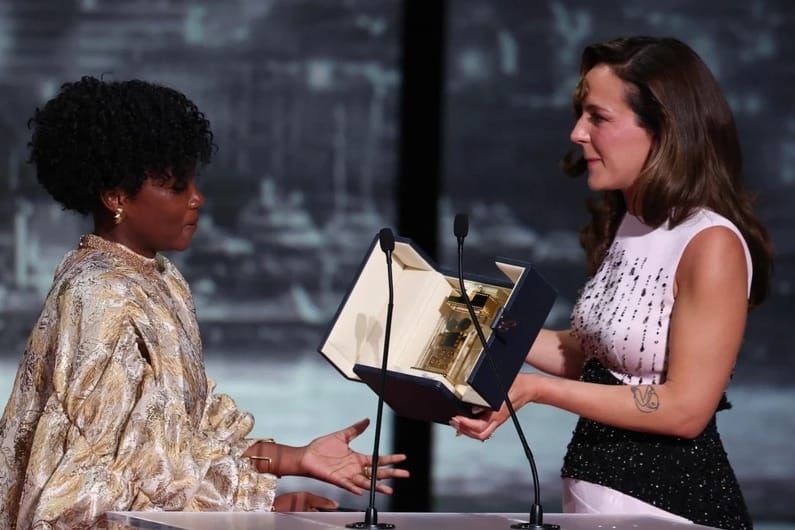
Rwandan feature Ben'Imana wins the Camera d'Or in Cannes

This second part of Streamlined’s Cannes recap looks at Japan and Korea’s high-profile presence at the festival and market; debunks some of the rumours swirling around Saudi pulling back from building out its nascent film biz; and provides some long overdue updates on developments in the African film industries of Nigeria and South Africa. 


Japan Moves Into Spotlight & Korea Makes A Comeback 

Among Asia’s film-producing nations, it was Japan’s turn to shine at this year’s Cannes film festival with three films in competition; several others in parallel sections, and the designation of Country of Honour in the Cannes Marche. After a long dry spell, South Korea also made a welcome return to Cannes with Na Hong-jin’s Hope in competition, Yeon Sang-ho’s Colony in Midnight Screenings and July Jung’s Dora, featuring Japanese actress Sakura Ando (Shoplifters), in Directors Fortnight.
 
Among the three Japanese competition titles (Ryusuke Hamaguchi’s All Of A Sudden, Hirokazu Kore-eda’s Sheep In The Box and Koji Fukada’s Nagi Notes) it was Hamaguchi’s first French film, about an encounter between a Parisian nursing home manager and terminally ill Japanese patient, that received the most praise and walked away with the best actress prize for Virginie Efira and Tao Okamoto. The festival also premiered Yukiko Sode’s All The Lovers In The Night, an adaptation of Mieko Kawakami’s novel, in Un Certain Regard; Kiyoshi Kurosawa’s period drama The Samurai And The Prisoner in Cannes Premiere; and Kohei Kadowaki’s animation We Are Aliens in Directors Fortnight.
 
As Streamlined has noted before, there are several reasons why Japanese cinema, feted on the Croisette since the 1950s but recently experiencing a resurgence, is currently so vibrant. After decades of relying on the production committee system of financing, and tending towards being conservative and insular, the local industry is going through seismic changes in its systems of production, film financing and government support.
 
Many were cynical two years ago when K2 Pictures, headed by former Toei exec Muneyuki Kii, announced in Cannes that it was offering an alternative to existing financing models by setting up a film investment fund. As Kii explained in a Cannes Marche panel this year, the production committee system has worked for many productions, but can be restrictive, discourages development of original material and is effectively closed to international collaborators. However, many doubted whether Japanese financial institutions would be willing to get involved in a risky business like film.
 
Kii overcame those doubts in Cannes this year when he announced that K2 Pictures has raised $33m (JPY5bn) through its first fund, backed by financial institutions such as Mitsubishi UFJ Bank and the Development Bank of Japan. The company has also raised $67m in debt financing for a total funding pot of $100m.

The ambitious startup also unveiled a credible debut slate of prestige and mainstream projects in Cannes, displaying encouraging levels of originality rather than just the usual manga adaptations that the Japanese studios tend to rely on. Among the new titles are projects from leading filmmakers, including Hirokazu Kore-eda’s Look Back, Miwa Nishikawa’s Children Untold, Nanako Hirose’s Between Two Lovers and Takashi Miike’s first documentary, Shumei - The Living Legacy of Kabuki, about Kabuki legend Ichikawa Danjūrō XIII.
 
At the same time, it was also clear in Cannes that K2 Pictures and other Japanese companies are continuing to open up to co-production and other forms of international collaboration – even major studios like Toei are announcing co-production projects – and since the introduction of the cash rebate scheme more international productions are finding their way to shoot in Japan.  A new generation of producers is emerging to help shepherd filmmakers through these innovative production and financing systems and veteran filmmakers such as Kore-eda have been vocal in their calls for improvements to industry working practices. Cushioning all this activity is a theatrical market that is one of the most buoyant in Asia.
 
Streamlined is currently researching a report looking at some of the independent producers in Japan who are helping to revolutionise this industry. The research is taking longer then we expected (actually all of the Streamlined Guides are taking longer to research than expected as we go into such depth) but we hope to share our findings with you soon.
 
It was also encouraging to see Korea back in Cannes in such a high-profile fashion, with strong notices for competition title Hope and news that Showbox had sold Colony to more than 120 territories ahead of its Cannes premiere. Even better news – Colony had an impressive opening weekend in Korea immediately after it played in Cannes, grossing $10m in three days.
 
Showbox is currently on something of a roll – it also recently released historical drama The King’s Warden, the highest-grossing Korean film of all time with $108m, and supernatural horror film Salmokji: Whispering Water, now the most-watched Korean horror ever with $22m. All these hits are much needed shots in the arm for an industry that has struggled at the box office since the pandemic. Long may this revival continue.

All Of A Sudden
All Of A Sudden

Saudi Recalibrates But Doesn't Scrap Film Ambitions Following 'Desert Warrior' Flop

Two years after Saudi Arabia had its first film in Cannes official selection – Tawfik Alzaidi’s Norah, which played in Un Certain Regard – the stories swirling in Cannes this year were more about whether the Kingdom was pulling back on its film ambitions following recent box office flop Desert Warrior. MBC Studios’ $150m English-language epic, directed by Rupert Wyatt and starring Anthony Mackie, reportedly grossed only around $1m in North America and worldwide following its late April release. Saudi sovereign wealth fund PIF’s recent decision to stop bankrolling the LIV Golf tournament also contributed to the gossip mill speculating that the Saudi entertainment boom was over.

Streamlined can’t claim to be an expert in international sports but it’s fairly obvious that Saudi’s film ambitions were never solely tied to just one production – a film with a troubled production history, that was finally released during a time when the Middle East was suffering through an actual war, because the producers couldn't face any further delays. Saudi took a big swing on an expensive international production – exactly as many ambitious Asian film industries, including China and India, have done in the past – and, like those other industries, quickly discovered that you need more than a ton of cash to produce a successful international movie.

Emerging film industries can’t be expected to hit the ground running – Saudi didn’t have any industry at all before 2018 – and they tend to make a lot of expensive, highly visible mistakes in the early days. (I remember one Chinese studio exec referring to it as R&D money). Productions like Desert Warrior should perhaps be regarded more in terms of how many people they’ve trained and what infrastructure they’ve created rather than judging them solely on the P&L. Besides, those who have seen the film say it’s not terrible and is likely to now have a second life on streaming.

Meanwhile, Saudi announced during Cannes that it’s increasing its production incentive to 60%, partly to alleviate the fears some Western studios may have over shooting in the region during a war. While Neom may have scaled back its studio ambitions, it's still offering production facilities and there are several other locations and sound stages in Saudi that continue to market their services. While the order books may not be full at present, there’s no reason to think that productions won’t travel there again when the current conflict is over.

We should also take into consideration the fact that the Saudi film industry is continuing to churn out a growing number of Arabic-language comedies, dramas and action films – last year including heist caper Alzarfa: Escape From Hanhounia Hell and comedy sequel Shabab Al-Bomb 2 – that are doing brisk business at the local box office.

Saudi has backed another big-budget action thriller, Adil El Arbi and Bilall Fallah’s 7 Dogs, starring Egypt's Karim Abdel Aziz and Monica Bellucci, which is scheduled to open this weekend. But whatever that film's fate in international markets, the Kingdom should probably focus on catering to its local audience and building out its pipeline of local productions – as well as continuing to co-produce with its neighbours in the UAE and Egypt – at least in the short term, rather than trying to compete with Hollywood on the international stage. There’s always plenty of time in the future for that. And anyway, as China and India discovered, you can build a strong domestic film industry without consciously trying to make international films.

Desert Warrior
Desert Warrior

Africa Ramps Up Capital Investment Following Streaming Withdrawal 

In some territories, the local film biz has suffered because streaming killed theatrical. In most of Africa it suffered because there wasn’t much theatrical business to start with, so streaming was initially regarded as a way to upscale and build out production and distribution infrastructure in emerging markets. But then the global streamers, most notably Disney+ and Prime Video, pulled out of the continent before they even got started.
 
To add insult to injury, France’s Canal+ bought out and then shut down the continent’s only indigenous streaming platform, Showmax, which had been a lifeline for creative producers before being shuttered earlier this year. As in many other international territories, producers in the main film and TV markets of Nigeria and South Africa bemoan the fact that Netflix is now the only buyer. Meanwhile, South Africa’s production incentives scheme hasn’t paid out to local producers for something close to three years now, despite protests from the local industry.
 
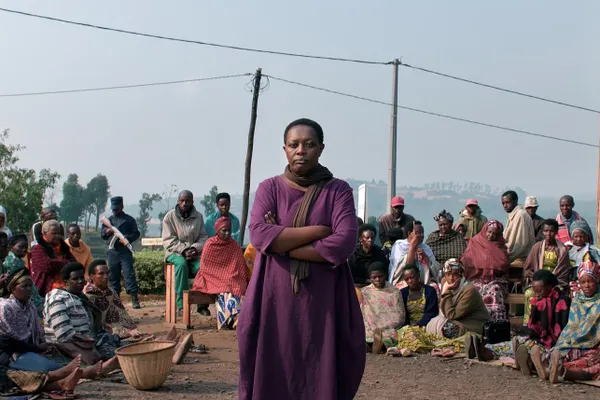
Despite all this, African cinema continues to have a high profile at the Cannes film festival. This year, Ben’Imana from Marie-Clementine Dusabejambo, the first Rwandan feature ever in Cannes official selection, was awarded the Camera d’Or, while best actor went to newcomer Bradley Fiomona Dembeasset for Congo Boy, a story set in the Central African Republic, directed by Rafiki Fariala. Both films premiered in Un Certain Regard. Ben'Imana is set in 2012 and follows a survivor of the 1994 genocide against the Tutsi people. Congo Boy is a semi-autobiographical tale from Fariala about a Congolese refugee in CAR dreaming of a musical career despite civil war and the disapproval of his parents.

L-R: Ben'Imana, Congo Boy

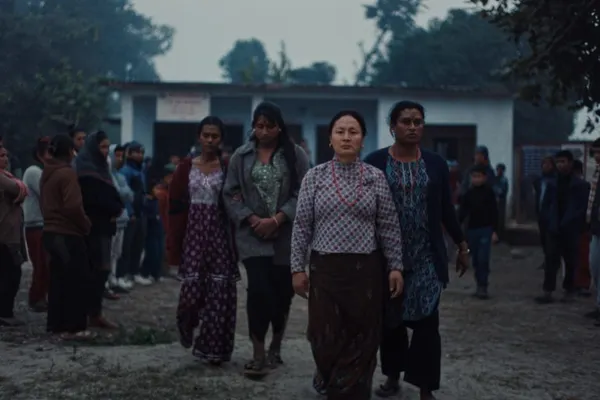
Both films are co-productions with France, which consistently supports cinema across Francophone Africa. But it became clear during Cannes that African producers are also working hard to bring private equity into the continent’s various film industries, so they can move beyond a grants and subsidies culture. A perfect example of this is the third Sub-Saharan African film in Cannes this year: Clarissa, directed by Nigerian brothers Ari Esiri and Chuko Esiri, which played in Directors Fortnight. The reworking of Mrs Dalloway, starring Sophie Okonedo, David Oyelowo and Ayo Edebiri, was financed by Afreximbank’s Creative Africa Nexus (CANEX) and MBO Capital. Described as a US-Nigerian co-production, the film was picked up for worldwide sales by Neon, which will also distribute theatrically in the US.
 
CANEX and MBO Capital are among a growing number of funds, production companies and private equity players coming to the fore with ambitious plans to back African content – a long under-invested segment of the global content industries – along with Next Narrative Africa, Idris Elba’s Akuna Group, Kenya-based HEVA Fund and South Africa’s Known Associates.

Much of the investment has so far been focused on Nigeria, Africa’s largest film producer and third largest economy (behind South Africa and Egypt), which has been upgrading its film industry through a combination of private investment and government support. At least the government keeps promising its support and has recently announced policies to strength intellectual property (IP) protection and export mechanisms.
 
A Cannes Marché panel hosted by Nigerian International Film Summit (NIFS) looked at developments in film and animation across the continent. Moses Babatope, CEO of Nile Media Entertainment Group, described how Nigeria’s film industry was once known for pumping out hundreds of low-budget video movies annually, but is now aligning with other international industries in making a smaller volume of higher-quality films that are monetised across theatrical releases and streaming: “We’re emerging in terms of quality filmmaking; representation of the black experience, and a viable theatrical industry,” said Babatope, adding that global streamers are still acquiring African content even if they’ve pulled back from producing.
 
“We’re also seeing ‘eventisation’ in terms of release strategy and I'd argue that the strategy for releasing a film in Africa is as elaborate as it gets – from TikTok promotions to red carpet galas and the incorporation of music and fashion elements – all of which is driving more interest in filmmaking and the film business,” Babatope continued.
 
Streamlined has been tracking the African content industries from a distance for some time now, but hopes to spend some time on the continent to do further research, as well as find some local journalists to help cover this evolving scene. In the meantime, we look forward to seeing Ben’Imana, Congo Boy and Clarissa on the international festival circuit later this year.

Clarissa
Clarissa

IN THE TRADES:

PRODUCTION NEWS:

AFRICA:

Nigeria’s Trino Motion Pictures reveals ambitious plans to take African films global

The Nomadic Film Space Launches at Cannes to Connect African Producers and Capital

African Producers Accelerator Announces New Partnerships, Participants of 2026 Edition

MIDDLE EAST: 

Saudi Film Commission Ups Film Incentive to 60% As Country Reboots Cinema Drive

Saudi Arabia’s MBC Studios Sets 2026 Release For Hana Alomair’s ‘Traveller’s Hell’ As It Doubles Down On Local Productions

Tarek Al Arian Hits Cannes With Project Inspired by High Society Killer Marguerite Alibert & Sons of Rizk Prequel

Hiam Abbas, Hend Sabry Set for Lebanese Social Comedy ‘Your Turn, 203’ Set in Battered Beirut Where Shooting Will Start if Ceasefire Holds

CORPORATE: 

Triple Green CineCapital Sets Charlie Nguyen Video Game Adaptation ‘The Scourge’ As First Vietnamese Investment

Japan’s K2 Pictures Unveils $33M Fund & Slate Additions Including Takashi Miike’s Kabuki Documentary

CJ ENM, TBS & U-Next Holdings Launch Korea-Japan Joint Venture StudioMonowa

Philippines Revamps Academy To Bolster Oscars Campaigns & Film Worker Protections

CANCELLED:

International Coalition for Filmmakers at Risk Calls For Release of Egyptian Filmmaker Omar Salah Marei Jailed on Charges of ‘Spreading False News’

CURATED: 

CANNES 2026: LIST OF AWARD WINNERS

Beirut’s Metropolis Cinema Pushes On With South Screens Festival As Israel Steps Up Bombing Campaign

New York Asian Film Festival To Open With North American Premiere Of Yeon Sang-ho’s ‘Colony’

Asghar Farhadi, Andrey Zvyagintsev, Kore-eda Hirokazu and Cristian Mungiu in Competition as Sydney Film Festival Reveals Full Program With 19 Cannes Films