How The US Writers Strike Might Impact International Territories

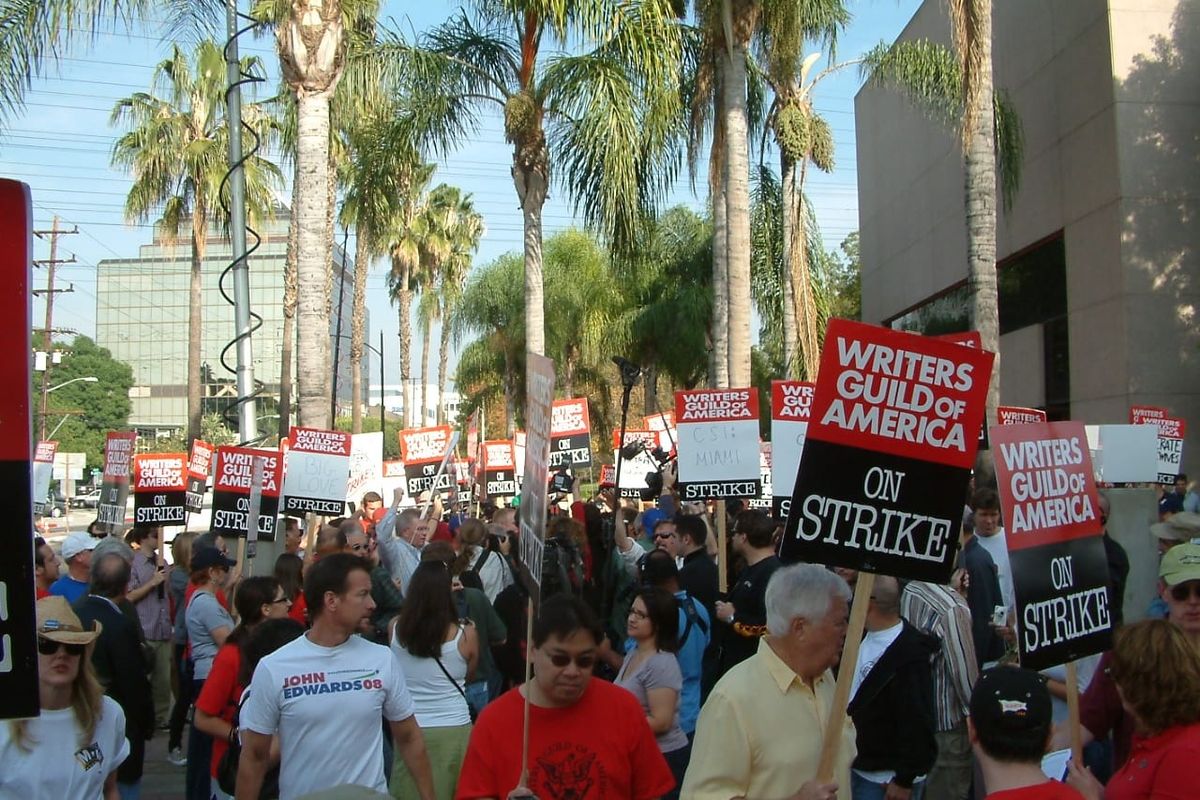
It’s been an interesting week with the Writers Guild of America (WGA) calling a strike of its members, just a few weeks before the world descends on Cannes to trade new independent film packages.
I won’t go into the reasons for the strike here as they’ve been well reported elsewhere, although to summarise, it’s connected to the way writers are paid in the streaming era, the rise of industry practices that remove guarantees on the level of regular employment, and the use of new technologies such as Artificial Intelligence (A.I.), which could replace writers’ work. Currently, A.I. is not a huge threat to writers as Large Language Models (LLMs) can only produce routine, soulless versions of scripts, but the technology is advancing rapidly, and you can be sure the bean counters are already looking at ways it can be used to cut costs.
The strike is expected to last a minimum of three months and writers may soon be joined by directors and actors unless the Directors Guild of America (DGA) and the American Federation of Television and Radio Artists and Screen Actors Guild (SAG-AFTRA) reach new deals before the June 30 expiry of current agreements.
The WGA last called a strike in 2007 – it lasted 100 days into 2008 and resulted in US talent agencies being forced to give up their production activities, which were rightly called out as a conflict of interest. But the world was a very different place in 2007. Quite apart from the fact that streaming hadn’t upended revenue and distribution models, the gig economy had not yet been normalised and A.I. was still the stuff of science fiction.