JAFF Market: How Storytelling & Social Media Are Driving Asian Animation

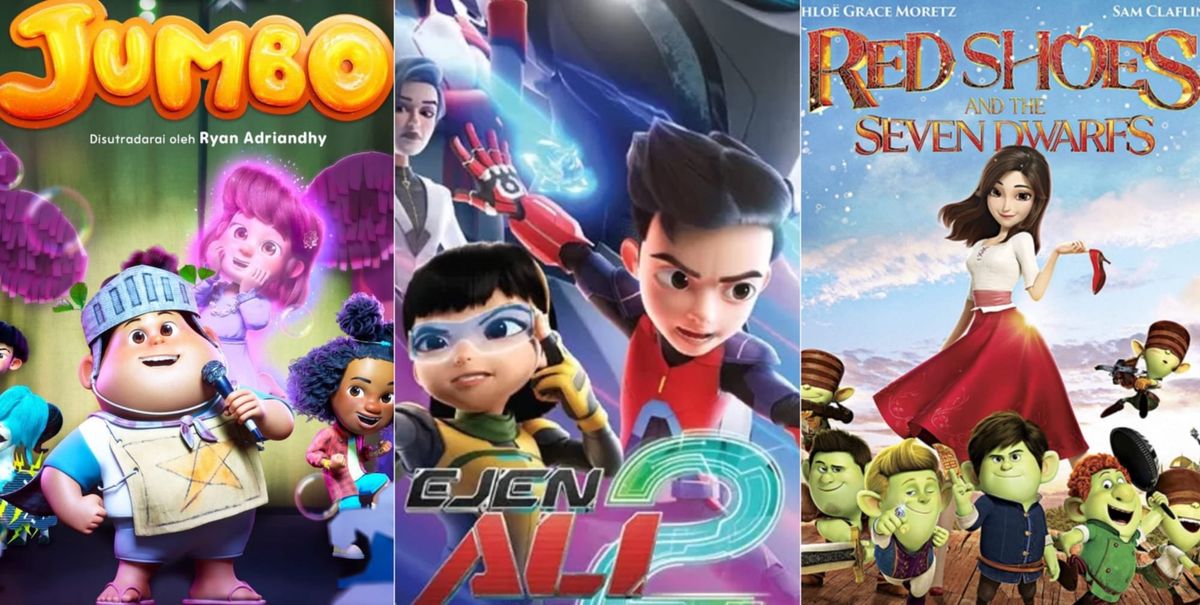
Asian animation is evolving beyond simple children’s stories towards more complex and culturally authentic storytelling, said leading producers and sales agents from Indonesia, Malaysia and South Korea speaking on a JAFF Market panel.
The panellists – including Ahmad Izham Omar of Malaysia’s Komet Productions, Anggia Kharisma of Indonesia’s Visinema Group and Youngjoo Suh, CEO of Korea’s Finecut – also discussed how their three markets are developing strategies to compete with animation from Hollywood and Japan.
Izham explained how Ejen Ali 2 has become the highest-grossing local animation ever in Malaysia with a story that combines gags and “visual candy” with more in-depth storytelling about a kid who is transformed into a superhero but is dealing with the loss of his mother.
“It’s evolved from the original, more simple cartoon for kids, which was a change we needed in Malaysia where the audience has become more complicated in their thinking,” said Izham, who has previously worked with Disney+ and Malaysia’s Primeworks Studios.
Komet’s upcoming production, Kisah Bawah Tanah, co-produced with Australia’s Spaceboy Studios, is aiming for a 13-plus audience with a Futurama-style animated series based on Southeast Asian ghost stories. “The jokes have a lot of innuendo for the adults, but for the kids, it’s something new that will feel a bit like entering adulthood but has still has these funny guys to look at,” Izham said.
Anggia Kharisma, chief content officer of Indonesia’s Visinema, explained why the studio invested seven years in producing animated family film Jumbo, which was regarded as a risky move, but paid off when it became the highest-grossing Indonesian film of all time earlier this year. The film contains themes not usually seen in Indonesian animation through the story of a young boy learning the meaning of true friendship, courage and self-confidence.
“It’s not just about how we make the Indonesian animation industry sustainable, it was also about how we make quality content for children,” said Kharisma, adding that less than 1% of Indonesian content is currently aimed at the kids audience. “So it wasn’t just about the numbers when we created the story, but what kind of stories will help children grow. We also believe that when you create a story that really resonates with kids, it will also resonate with the parents.”
Both Jumbo and Ejen Ali 2 also benefitted from featuring characters and settings that are more recognisable to Indonesian and Malaysian audiences, compared to the stories and settings of Hollywood and Japanese animation.
Youngjoo Suh, CEO of Seoul-based sales agency Finecut, explained how she had tried out three different types of animated films in the Korean and international market – 2D kids animation Leafie: A Hen Into The Wild, which remains the most successful Korean animation of all time; the more adult horror-themed animation Exorcism Chronicles; and Red Shoes And The Seven Dwarfs, which was developed for international markets with Hollywood voice cast including Chloë Grace Moretz and Sam Claflin.
“I wanted to know what kind of animation can work, because Korean animation was mostly 2D, while Hollywood is usually 3D and the quality is brilliant, so we had this dilemma of how we can compete in the global market,” Suh said. “In the end I realised the story is the most important thing, and whether it’s a universe that can be expanded, as those are the factors that get the international market interested.”
Leafie made around $3m from 2 million admissions in Korea in 2011, sold strongly across Asia, Europe and Latin America and eventually went on to gross $13m worldwide. Suh presented figures that showed that Hollywood animation can reach more than 10 million admissions, and Japanese anime around 5 million in the Korean market, demonstrating the scale of the competition.
Red Shoes also sold well and grossed around $10m worldwide, although it didn't perform as well as Leafie in the Korean market. Suh explained how both the script and finished film were tested with international audiences: “Thanks to the story development and screen tests, there was a bidding situation in some major territories like the US, Germany and Italy.” She also said that while dubbing helps animated films to travel, especially when aimed at children, it’s important to localise to each individual territory rather than rely on English-language dubs.
The three speakers also touched on streaming, a new international distribution channel for Asian animation, although global streamers tend to focus on Japanese anime and series, rather than feature films. They also discussed the huge impact of social media in marketing animation both at home and overseas.
Izham said: “Gone are the days when you rely on traditional media for marketing. They used to have all the power but now they just support the social media. We usually work with young people on marketing because they understand the language and social media is key.”
Kharisma said it was essential to partner with platforms like TikTok to create content around new releases, and that these efforts cross over into the offline space, with young audiences doing a big part of the promotional work themselves. “Jumbo was released over the Lebaran holiday but when the kids went back to school, they became our promoters, because they told all their friends to come see the film,” Kharisma said. “We did a lot of offline activations, so it's important to think 360 degrees for social media.”
The strong word-of-mouth aspect can also translate into multiple visits. Izham said that said that some young viewers went to see Ejen Ali 2 several times at the cinema with different family members, while Kharisma said she encountered one child who had seen Jumbo 17 times.
JAFF Market took place November 30-December 1 at the Jogja Exhibition Centre in Yogyakarta, Indonesia, drawing around 7,784 visitors. The event also featured panels on Indonesian producers, box office and cinema infrastructure and the wider Southeast Asian market, along with presenting the first Indonesian industry report, a collaboration between JAFF Market and data analytics firm Cinepoint.