Netflix-WB Deal Threatens Cinemas But May Help Indie Filmmakers, Say Red Sea Souk Speakers

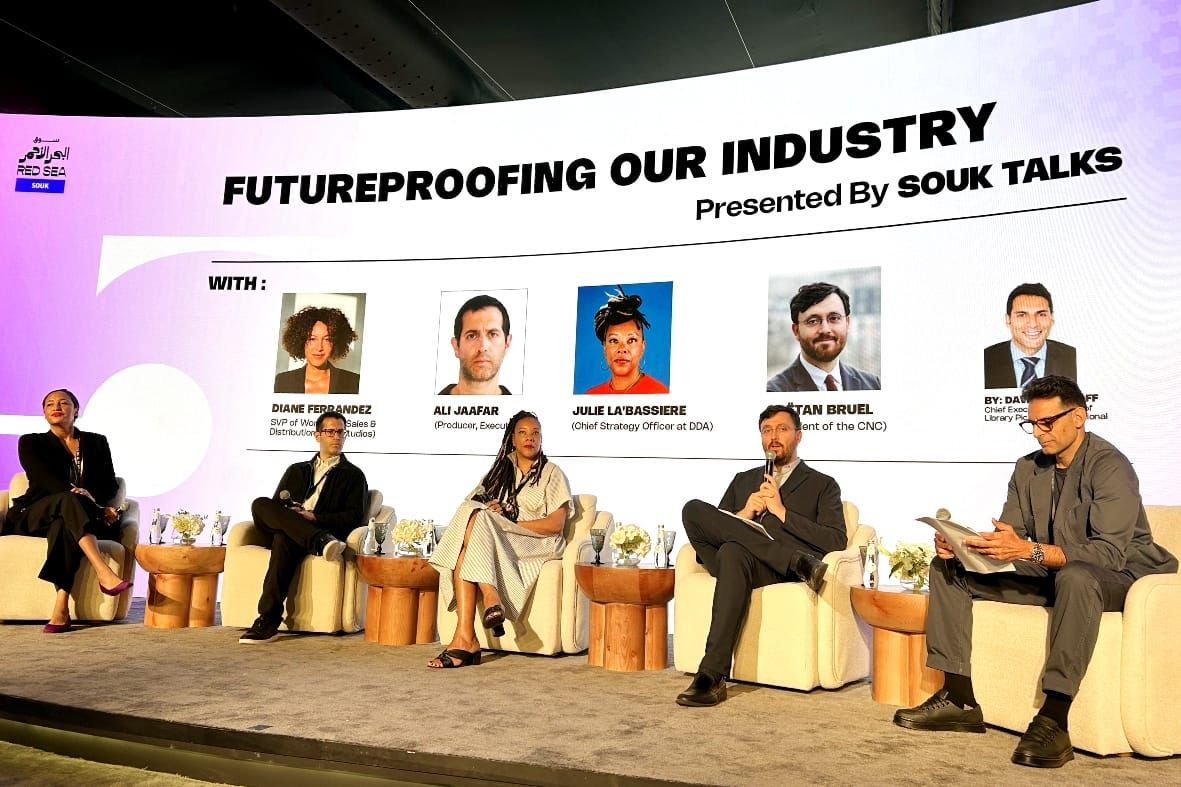
Netflix’s planned acquisition of Warner Bros poses a huge potential threat to global theatrical infrastructure, but on the other hand may provide opportunities for independent filmmakers, said speakers on a Red Sea Souk panel entitled 'Futureproofing Our Industry'.
Gaetan Bruel, president of French film agency CNC, made no bones about the fact that exhibitors around the world are deeply concerned by the deal, fearing that it will reduce the number of movies available for theatrical release.
“We have two aggravating factors,” said Bruel. “The first is Netflix’s long-time ambivalent relationship with cinema. The second is the dramatic decline in theatrical attendance, if we think in terms not of box office but attendance, in 2019 we sold 8 billion tickets worldwide, but last year it was less than 5 billion. So that’s a drop of 40%.”
Referencing recent comments from Netflix co-CEO Ted Sarandos – who said he will honour theatrical agreements on existing Warner Bros films, but that “over time, the windows will evolve to become much more consumer-friendly” – Gaetan continued: “We should ask in return, what about making the cinema windows more exhibitor friendly so that they can just keep existing and doing what they do? As we say in English, you cannot have your cake and eat it.”
DDA Chief Strategy Officer Julie La’Bassiere was more positive about the deal, observing that opportunity often comes from disruption, and the big increase in consolidation could encourage independent filmmakers to take more risks. “I'm hoping in this disruption that indie film will actually start to rise,” La’Bassiere said. “Independent filmmakers will be a little bit more scrappy, will be a little bit more creative, and provide an alternative voice to what we think will be this big, consolidated behemoth of content.”
Ali Jaafar, head of MBC Studios’ film division, agreed that the merger could provide opportunities for indie producers as platforms such as OSN, which currently have output deals with Warner Bros, may lose that content and need to fill the gap. “The answer may well be local original content, which becomes an opportunity for Arab producers. It could create an opportunity for others to fill that space, and it would be a good thing from a local point of view, if we can tell our own stories on those platforms.”
Diane Ferrandez, SVP Worldwide, Sales & Distribution, AGC Studios, commented that many filmmakers who have recently been working with studios and streamers are going back to an independent model to protect the theatrical window. “We're such a resilient industry, and we're an industry of entrepreneurs, and there are likely to be incredible opportunities,” Ferrandez said.
After discussing the bombshell Netflix-WB deal, the Red Sea Souk panel, moderated by Library Pictures International CEO David Taghioff, then returned to discussing various ways of futureproofing the global content industry.
Bruel talked about the French model of levies, subsidies and international co-productions, which has contributed to a diverse French theatrical market, as well as “amplifying local voices” on an international stage. “We believe in a universal idea of cinema, not just a French idea, and have pivoted our international strategy from just supporting the export of French cinema to implementing cooperation based on the needs that are expressed to us,” Bruel said.
La’Bassiere talked about the increased involvement of brands in film financing – such as Saint Laurent becoming an equity partner in Emilia Perez – which in addition to hard cash helps to create a marketing ecosystem: “But it’s really important to remember that there needs to be authenticity in that relationship, because audiences are so smart, they will do their research, and they will call you out on social media, on everything.”
Jaafar talked about the potential of emerging markets such as Saudi Arabia, where the market share of local films has increased over the past year from 9% to 19% and is projected to reach more than 30% in a few years. “Already we’ve seen that there’s no pattern in the variety of Saudi films that have succeeded at the box office this year – none of them are connected to each other – but what was key is the connection those films had with the audience.”
The speakers agreed that while it may make sense to explore emerging markets, especially those such as Saudi and Indonesia with young audiences and expanding box office, the secret to making films that work internationally is to stay authentic to their local culture: “You can’t reverse engineer an international movie,” said Jaafar.
The wide-ranging panel also touched on the need for filmmakers to understand the business as well as the creative side of filmmaking; and for distributors to become involved in the film development and production process at an earlier stage.
Bringing the discussion back full circle to Netflix-WB deal, Ferrandez concluded that a strong theatrical release is more important than ever to monetise a film across other windows. “Under the previous system, if a film didn’t perform well, you had an output deal so knew how much money you’d make eventually,” Ferrandez said.
“Nowadays Pay One deals are expiring and not being renewed, and partners want to pick and choose; and how do they choose? They choose the films that have resonated, and you only know that they’re resonating through a strong theatrical release.”