
Streamlined Guides: K-Content – What Korean Drama Built & Who Gets Paid


PART ONE: Where Korean drama's strengths came from; why the hits don't pay the people who make them, and what the next 18 months decide
Editor's Note: This is the first installment in a series that looks at the Korean content industry – how it evolved, where it stands now and which business models it could be adopting in the future. The series is written by Jaden Jaebum Park, a director and producer at Korean broadcaster MBC, who between productions writes about the economics of content industries, and about who ends up owning the pipeline.
Park has written an in-depth study, 'The Question That Arrives Late', which looks at how four content industries – Hollywood, Japan, Hong Kong, and South Korea – kept or lost the value they created. Streamlined Guides is publishing the fourth part of that study, focusing on Korea, which we’re offering to our subscribers as Busan International Film Festival and the Asian Film & Contents Market get underway.
This first installment looks briefly at those three other industries – Hollywood, Japan, and Hong Kong – to provide context, before delving into the origins of the K-content industry, up until the point where China left and Netflix arrived. Park explains below what the upcoming installments will cover. Streamlined has never before seen such insightful analysis of the Korean content industry and we're sure our readers will find it as binge-worthy as we did.
As always, these guides are completely funded by readers so the information in the report has been researched independently of any financial support from advertisers and/or government agencies. We’re offering this first part for free while upcoming installments will be available to Streamlined Guides subscribers. Please reply to this email if you have any problems accessing the report.
Argentina Paid Me For A Show Korea Never Would
By Jaden Jaebum Park
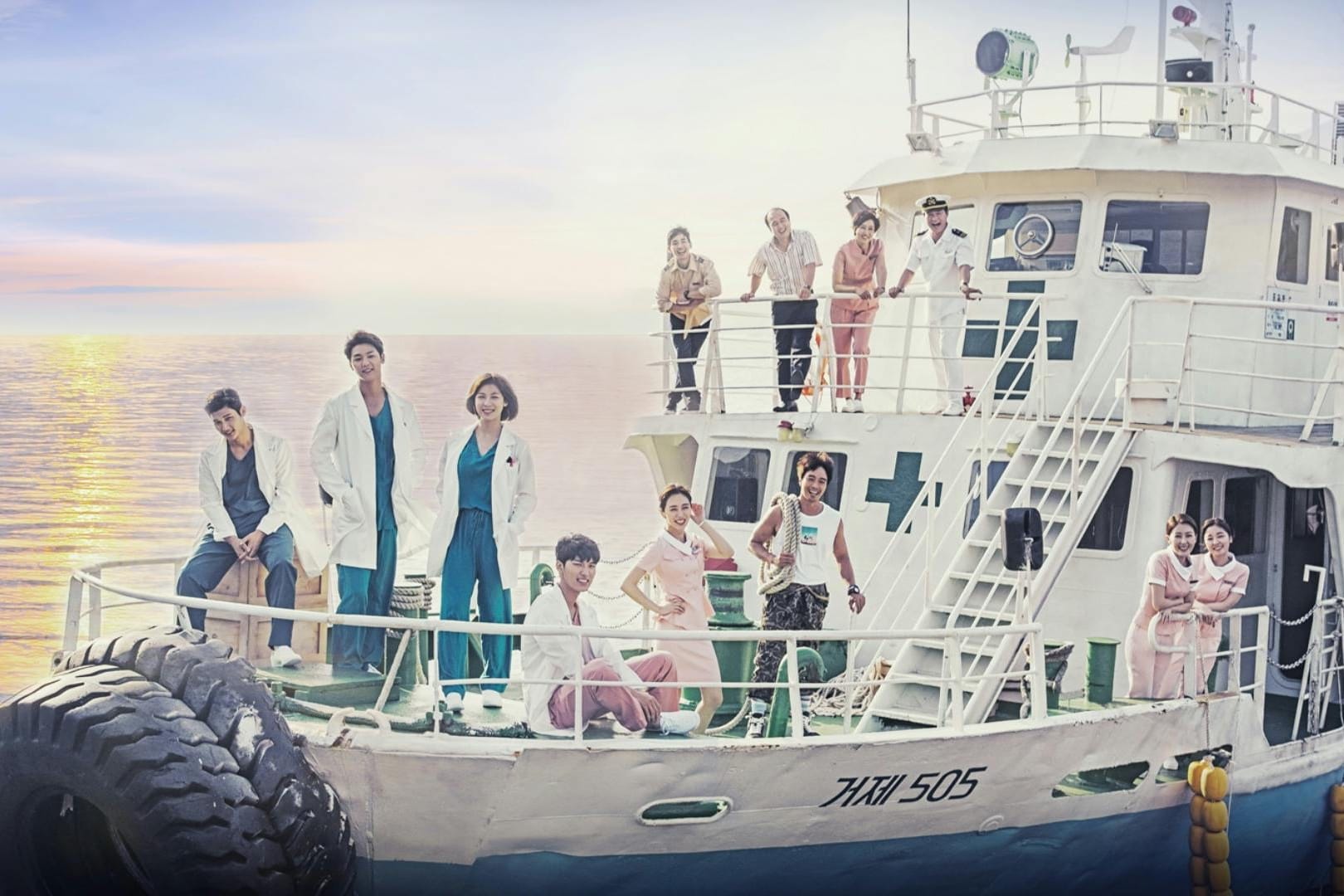
In November 2023 an email arrived from the international desk of the Directors Guild of Korea. Argentina's directors' society, DAC, had collected royalties for Korean works streamed on Netflix in Argentina, among them Hospital Ship (2017), a drama I had directed for MBC, and the guild had tracked me down to hand the money over.
Not one won of it could be paid to a company, the email said; it could go only to the person who made the work, and if it was not claimed by the end of the year it would go back to Buenos Aires. The desk added that it was searching for directors “by every means” and finding it hard. The amount was not the point. The country was. Argentina had a working system for finding a Korean director and paying him for a Korean drama. Korea, which made the drama and sells it to the world, does not.
That is the mismatch this series is about: an industry that exports at the scale of a major power and has not yet built the institutions that scale usually brings.
Argentina has treated film directors as authors in law since 2003, and its broadcasters, cable operators and streaming platforms pay for the work they show. Spain does the same through DAMA, its society for directors and screenwriters. Systems like these run on reciprocity: a country collects for foreign authors when the favour is returned. Korea grants its own audiovisual authors no such right, so it has nothing to return. Argentina and Spain paid anyway.
It was not only me. In February 2023 the guild reported that the two societies had remitted about KRW270m (around $200,000) for roughly 500 Korean film and drama directors, Squid Game's Hwang Dong-hyuk among them. Hwang had told the Guardian in 2021 that Netflix had paid him "according to the original contract," that it was "not like Netflix is paying me a bonus," and that he was "not that rich." Argentina paid him something. Korea paid him nothing.
By this August, 333 of the guild's 853 directors had received money from abroad, and last month Poland's society paid 72 more. Korea's two most famous directors already collect this way: Bong Joon-ho through the Writers Guild of America, Park Chan-wook through France's SACD. The bill that would give every Korean director and writer the same right at home, a statutory claim to fair payment from whoever finally shows the work, has been in and out of the National Assembly since 2011. The latest version stalled in committee in June 2023 after producers, broadcasters and platforms objected, and it has not moved since.
That is the strangest fact I know about the business I work in, and it is a small window onto a larger one. Korean content has won the argument about reach. The harder question is what stays behind when a hit leaves the country, inside the companies, crews and careers that made it. So far, almost nothing. And the reason is design, not a shortage of talent.
I have sat on both sides of that table, as a director and later running drama development at a network, and what I learned from holding both is that talent goes only as far as the structure behind it. A brilliant director can be destroyed by a bad deal. A mediocre project can survive on solid infrastructure.
This report is drawn from 'The Question That Arrives Late', a study I completed this year of how four content industries, Hollywood, Japan, Hong Kong, and Korea, kept or lost the value they created. The first three parts of that study are the map this one is read on, so I will begin with them, briefly. Then the origins of what the world now calls the Korean strength. Then the moment, between 2016 and 2019, when China left and Netflix arrived, which explains more about today's contracts than anything in the contracts themselves.
Upcoming installments will look at what a hit is actually worth, and to whom; where all of this leaves Korea in the autumn of 2026; three potential options for future development; and who will own the tools when AI starts reshaping the industry.
Three Industries Asked This Question Before Korea Did
Every content industry eventually has to answer one question, and the question is not whether it can make hits but what it gets to keep when it does. Hollywood asked it in 1948, when the Supreme Court's Paramount ruling broke up the studio system. Japan asked it around 1963, when television emptied the theatres. Hong Kong asked it around 1997, too late, as it turned out. Korea is hearing the three answers together, in the order the three industries arrived at them.
Hollywood's voice is the longest and the most ambiguous. The American industry built creator capital three times. United Artists in 1919 was the original gesture: artists holding capital, distribution and ownership. The New Hollywood of the late 1960s and 1970s was the second, a generation of directors holding real creative and financial control. The Sundance, Miramax and HBO sequence of the 1990s and 2000s was the third, a layered ladder on which work could climb from discovery to premium distribution while its makers accumulated reputation and rights at each rung.
Each return was shorter than the last, and each time creators held less of the system at the end. United Artists held the capital. The New Hollywood held the authorship. The Sundance-to-HBO ladder held leverage and reputation but less ownership, and in 2008 the Sundance Channel itself was sold for about $496m, the discovery layer becoming an asset on a larger balance sheet. Then streaming folded the whole ladder toward a single platform. What Hollywood says, read as one voice, is that creator capital is buildable, repeatedly, and that the buildings get smaller each time while the architecture that absorbs them gets faster.
Japan's voice is the most stable. Japan built a system that preserves IP across decades: the production committee, a consortium of publishers, broadcasters, advertising agencies, music companies and merchandising partners that spreads risk, slows decisions and absorbs shocks. The structure protected ownership. It also became a ceiling. Consensus produced conventional outcomes, decision speed declined, and the system was strong enough that it never had to ask whether it had lost the ability to produce the unexpected. What Japan says is that stability is buildable, and that its cost accumulates so slowly that by the time it is visible the structure is too settled to reform without breaking the protection it provides.
Hong Kong's voice is the shortest. Its industry rose on speed and talent without the institutional layer that would have absorbed a shock. When external markets shifted in the late 1990s, the buffer was not there. Capital left. Talent dispersed. The window in which a redesign would have been possible closed in about three years, and nobody chose to close it. What Hong Kong says is that the window does not announce its closing, and that an industry which waits for the diagnosis to be unambiguous has, by definition, already missed the period in which redesign was possible.
From the three records the study draws four conditions that an industry would have to hold at once to avoid the worst of each pattern. I will use their names throughout the series, so here they are:
Velocity is the operational speed that gives a producer leverage to ask for anything at the deal table; without it the producer is substitutable and the negotiating position erodes one cycle at a time.
Protection is the legal and contractual layer that routes rights, data and remuneration back to the producer and the creator; without it the upside of a hit transfers to the buyer at signing, invisibly, and becomes visible two years later when the property has compounded somewhere else.
Resilience is the capital that carries a producer across the gap between owning a right and being paid by it; without it a producer who holds rights but cannot make payroll for eighteen months sells them under pressure, and the structural cash crisis gets called bad luck.
Accumulation is the institutional layer that turns retained rights into a compounding asset: slate funds, bridge finance, sequel practice, library valuation; without it, rights that survive are inventory rather than portfolio.
The four interact in sequence. Velocity buys the chance to ask for protection. Protection produces the rights that resilience has to carry. Resilience makes accumulation feasible. Accumulation lets a producer reinvest in velocity for the next cycle.
None of the three earlier industries held all four. Each held two or three, and what each lacked, not what it had, decided its settlement. In those three records an industry carried a single missing condition for a generation; missing two, it lost its position inside a decade.
Korea holds velocity strongly. It does not hold protection. It holds resilience at the top tier only, and accumulation thinly. That is the composition this series is about, and the rest of this installment is about how it came to be.
Where The Strengths Came From
Korean drama did not become good after it became stable. It became good because stability never arrived first.
By the late 1990s three networks were fighting for the same 10pm audience and the same advertising money. SBS had launched in 1991 as a third commercial broadcaster, which put KBS, MBC and SBS head-to-head on the same nights, and a one-point rating gap showed up in the ad rate.
A state policy of outsourcing production had created independent producers who had to move fast before they were capitalised and never owned the relationship with the buyer. Then the 1997 financial crisis pushed star fees up for good, and successful dramas detached from any previous cost baseline. Industry veterans call the years that followed the Wild West of Korean broadcasting. The schedule was fixed. The money was unstable. The buyers were powerful. The producers were replaceable.
The competition showed up in the schedule. Episodes that ran close to sixty minutes grew to sixty-three, sixty-five, sometimes seventy, because more minutes meant more ad inventory. Start times crept from 10pm to 9:59 to 9:57 to 9:55, to catch the audience before the rival did. The arithmetic that followed is still the industry's arithmetic: 130 to 140 minutes of finished material every seven days, shot in four to six.
Scripts were written while cameras rolled. Editing ran beside transmission. Contracts, in those years, were sometimes signed after the show had finished airing, and a great deal of business was done on a handshake and settled, when it went wrong, in court. The remarkable fact is not that Korean drama sometimes came close to broadcast failure. The remarkable fact is that it so often landed on time.
I should say something here that no data can prove and that anyone who has worked in Seoul will recognise. Korea is a small country with a small market and a competitive culture that starts in school and never lets up, and an industry built in that soil had two instincts from the start.
It looked outward, because the domestic market alone could not pay for what it was making. And it pushed everything to the limit, because the competition next door was doing the same. That is where the intensity comes from. Korean drama is unusually extreme. The genres are harsh, the emotions are large, and there is more crying, and more grief carried across a whole story, than in almost any other country's television, and this is true, surprisingly, of the trendy romances as much as the melodramas.
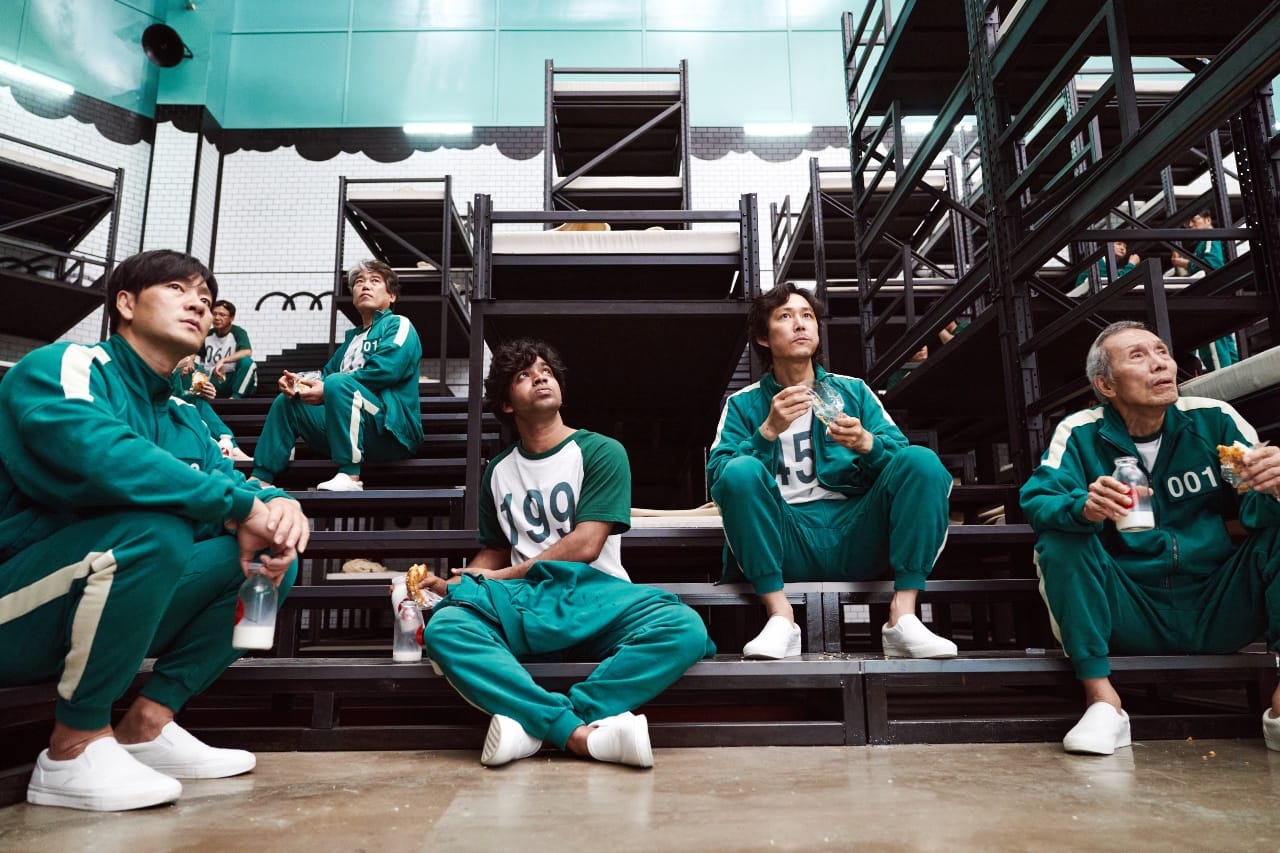
Squid Game (2021) is the version the world knows: a children's game played to the death, staged with the seriousness of a war film. Outsiders read that as a stylistic choice. It is a temperament. The same people who made it also, by and large, love stories, have a good ear and carry a lot of history in them, and the mixture is what travels.
The product of that system, in the first wave of Hallyu, was the romantic series sold cheaply to broadcasters across Asia, for a fraction of what it would have cost them to make. But the form that made it cheap also made it strange. Sixteen episodes, two a week, eight weeks of ratings: that was a broadcast business model, not a storytelling choice.
Most stories spend their engine around episode eight or ten. The main couple has met, resisted, broken, returned. Under a different economy the story would begin to close. Under this one it had six more weeks to fill, so Korean drama learned to extend itself: a second couple, a family secret, a revenge plot, a thriller turn, a birth secret, a rival sibling. Some of it was padding. Some of it became grammar.
This is where much of what the world now calls the Korean strength came from. The form learned to mix genres because one engine was rarely enough to carry sixteen episodes. It learned ensemble density because two characters could not hold a thousand minutes alone. It learned to move from romance into thriller, from comedy into grief, without breaking the show's emotional logic, because it had to, every week, with the audience already watching while later episodes were still being written. A failing subplot could be cut. A breakout second lead could grow. A villain could sharpen. The audience was not a data abstraction after release. It was a living pressure on next week's script. What looked like agility was instability turned into skill.
Those strengths were not free. The same system weakened development, normalised late-stage writing, and financed itself on exhausted bodies. The time the schedule could not provide came from people: sleep, debt, panic, favours and the loyalty of crews who knew that missing the slot was the one failure that could not be explained away.
Once in a while the country saw what that arrangement was made of. On the night of 23 December 2017, at about one in the morning, a crew member on the tvN fantasy series Hwayugi fell more than three metres while hanging a chandelier on a set, and was left paralysed from the waist down. The next evening the second episode went out with its visual effects unfinished: a stuntman on visible wires where a creature should have been, the broadcast interrupted twice for trailers and cut off at 10:41pm. An editorial in the Kyunghyang newspaper the following day called it the broadcast accident that a reckless race against time had produced. The two events were the same event.
The same system rewarded the ability to survive a crisis more than the ability to prevent one. It trained the industry to close stories completely inside a single season, which left it with little muscle for sequels, long-tail IP or planned worlds. And it accumulated nothing. What an industry usually builds during a boom, a capital base, an institutional layer, a bench of mid-career companies, Korea did not build, because every won of the boom was converting into next week's episode. Speed was bought on credit, and the credit is now coming due: the crews that built the reputation are aging out, and the capital to renew the infrastructure is no longer flowing.
None of this was created by Netflix. In the four conditions, it is velocity without the other three, and it was that shape before any platform arrived. What a platform found, when it did arrive, was a creative culture that had already learned to deliver the impossible, and that made it unusually accommodating to terms a less adaptive workforce would have refused.
China Leaves, Netflix Arrives
The contracts that Korean producers sign today were not designed in Seoul or in Los Gatos.
They were designed by a coincidence of timing, and the coincidence is worth telling in full because it explains why an entire industry accepted a template without much argument.
Between 2014 and 2016 the money came from China. My Love From The Star (2013) had become a phenomenon on Chinese streaming in 2014, and Chinese platforms began pre-buying Korean dramas at prices the domestic market had never seen. The per-episode price for a top title climbed toward KRW300m ($250,000 at the exchange rate of the time).
iQiyi paid about $250,000 an episode for Descendants Of The Sun (2016), roughly KRW300m, against KRW4bn from KBS for the whole run. The Chinese money changed how Korean drama was made before it changed how it was sold. In January 2016 China extended its pre-broadcast censorship, which had applied to television, to internet platforms as well, so that a series had to be submitted months before release. Live-shooting, the Korean way, could not meet that, and the industry moved to full pre-production for the first time in its history so that the Chinese sale would clear. Star fees rose again on the Chinese premium. Budgets rose with them.
Then, in July 2016, Korea agreed to deploy the American THAAD missile system, and from about November 2016 Korean dramas stopped clearing Chinese review. Nothing was announced. The ban was never official, which is why Korea calls it by an unofficial name, the Hallyu ban, and why nobody could negotiate with it.
Saimdang (2017), a period drama with Lee Young-ae, had passed Chinese review in November 2016 and was built for simultaneous release in both countries. It aired in Korea in January 2017 and in China in January 2022, five years late, the first Korean drama to run on an official Chinese platform in six years. Shows that had been financed on the assumption of a Chinese sale had to be re-financed without one. Star fees did not come back down. Between 2017 and 2018 the industry faced a question it had no institution to answer: how to absorb a cost base that had been priced for a market that no longer existed.
Netflix answered it. The service had launched in Korea in January 2016 to little notice. Okja came in 2017 and Mr. Sunshine in July 2018: a tvN period drama with a budget of about KRW43bn, of which Netflix paid around KRW30bn, roughly 70%, for the right to stream each episode the day it aired on Korean television.
Kingdom (2019), the first Korean original, followed in January 2019, a zombie story set in the Joseon dynasty. That same year Netflix bought a script that Hwang Dong-hyuk had written in 2009 and carried around Seoul for a decade, turned down by studios and actors as too grotesque and too unlikely, in a stretch so lean he sold his laptop. It was Squid Game. In November 2019 Netflix signed three-year deals with Studio Dragon, for more than 21 series and the right to take up to 4.99% of the company, and with JTBC, for more than 20. In 2021 it committed $500m to Korean content for the year. In April 2023 it committed $2.5bn over four years.

It is hard to overstate what this looked like from inside the industry in 2018. To the production companies, Netflix filled the hole China had left, financially and psychologically, and it did something the broadcasters had never done: it paid up front.
Under the broadcaster system, a producer received a per-episode fee that covered part of the budget, made up the rest from product placement and overseas sales, carried the deficit risk, and often did not have a signed contract until the show was on air.
A buyer who paid the full budget, plus a margin, in tranches, on a schedule, before delivery, was not a negotiation. It was relief. To the creators, Netflix was something more. It was freedom from the slot, from the advertising minutes, from the sixteen episodes and the four-to-six-day shooting week. It was a budget that could actually be spent. It was genre, and a room to try things the networks' standards departments would have refused. And it was the world. A Korean writer or director whose work went out to 190 countries on the same day felt, for the first time, that the work was being seen at its scale. To be on Netflix was an honour, and people said so.
And the contracts were written on the other side of the Pacific. Netflix's agreements were drafted and reviewed by its lawyers in California. Korea had almost no entertainment lawyers, a contracting culture built on handshakes and late paperwork, and no experience of the kind of rights schedule a global platform attaches to a deal. The two sides were not equally equipped. Producers signed terms they could not have negotiated even if they had known which terms mattered, and most did not, because the previous system had never required them to know.
This is the two-sidedness of Korean speed. The instinct to move first and solve later was the soil Hallyu grew in. It was also the reason the industry had no system in place on the day the most sophisticated buyer it had ever met arrived with a standard form.
Everyone knew what would come next, and it came faster than expected. Within three or four years the platform had become, in the word Korean producers use, a vacuum cleaner. Top writers and actors began to make a Netflix release a condition of signing. The legacy networks could not compete financially and could no longer persuade psychologically.
The holdback, the interval before a Korean broadcast drama could be seen on Netflix, did not shrink the way people remember. From the first simulcast, JTBC's Man To Man in April 2017, the gap was already one hour after broadcast. What shrank was everything around the hour. That first deal excluded Korea itself; within three years the same-day release included Korea. The cable channels and JTBC crossed first, because a buyer paying 70% of a budget, as Netflix did for Mr. Sunshine, gets to set the window.
The three terrestrial networks held out, built their own streaming service, Wavve, in 2019, and kept their new dramas off Netflix at home. Then their advertising fell by a fifth in a single year, 2023, and in December 2024, SBS signed a six-year agreement to supply its new dramas and variety to Netflix, at home and abroad, in exchange for production funding. In September 2025 it left Wavve altogether. Wavve had 3.8 million monthly users this February. Netflix in Korea had about 11.6 million. A Korean network now premieres its own shows on an American service, by contract.
That is the history: where the strengths came from, and how the money behind them changed hands twice in five years without the people who made the work ever holding the pen. The next installment in this series looks at the present: what a hit is worth now, who is paid when one lands, and the 18 months that decide whether the pattern holds.
Jaden Jaebum Park is a director and producer at MBC and a former head of drama development at the network. He writes, between productions, about the economics of content industries, and about who ends up owning the pipeline. This is the first installment in a series looking at the K-Content industry. The second installment will be published on October 9.
![Agent Kim Reactivated [Credit: SBS]](https://storage.ghost.io/c/f6/3b/f63bba50-4e07-4fdb-a685-47f18f3c5b84/content/images/size/w600/format/webp/2026/10/Agent-Kim-Reactivated.jpg)


