What The Success Of 'Elephants In The Fog' Reveals About Nepal’s Film Industry


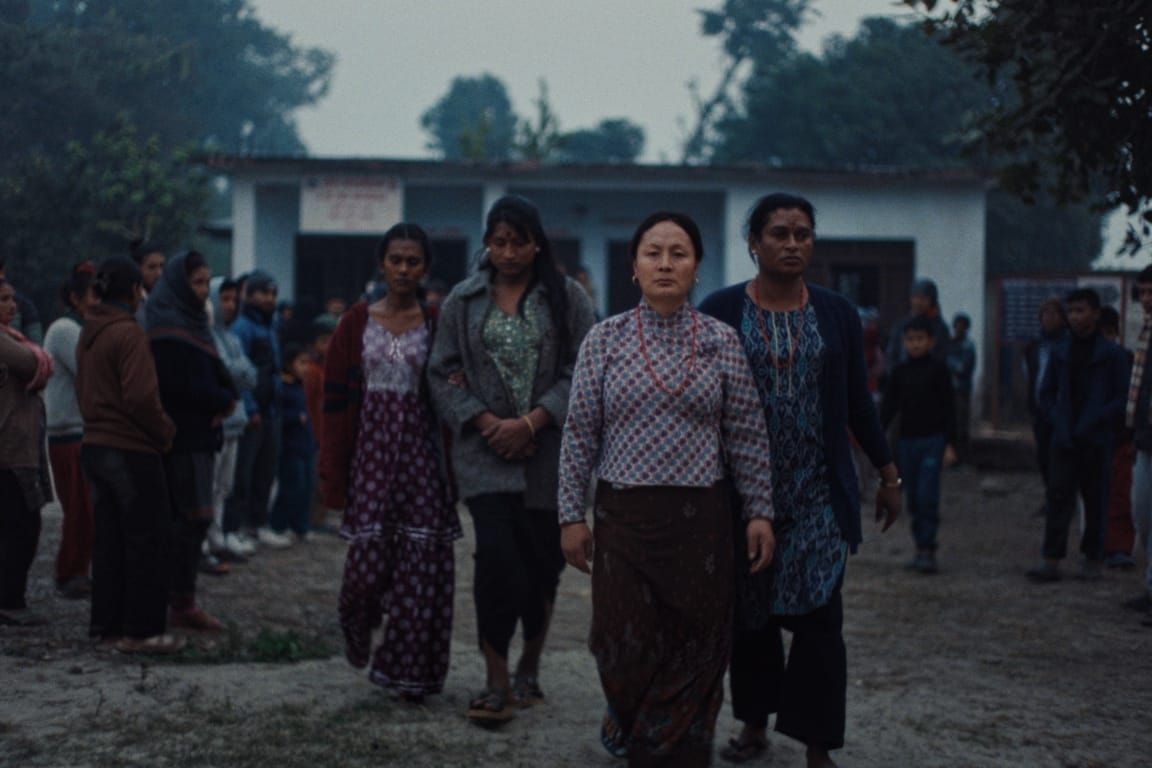
This edition of Streamlined is taking a close look at the Nepali film industry, which received a huge boost this year with the Cannes award and international sales success of Abinash Bikram Shah’s Elephants In The Fog. But like many smaller film industries in the Global South, the Nepali film business remains sharply divided between an arthouse sector, that is heavily dependent on European funding, and a formulaic mainstream cinema that doesn’t travel much beyond the diaspora.
Nepali film critic and director Abishek Budhathoki has shared his thoughts on the state of financing and distribution for the indie side of the industry, and I’ve put together some notes on the mainstream.
Shah’s feature debut, Elephants In The Fog, about a trans community matriarch investigating her daughter’s disappearance, is a remarkable achievement, winning the Jury Prize in Un Certain Regard at this year’s Cannes film festival, and earlier this week taking the top prize at Bangkok International Film Festival. It is also Nepal’s official entry to the Best International Feature category of the Oscars and is selling strongly through Best Friend Forever (see links round-up below). However, as Budhathoki comments below, festival hits like this raise some interesting questions about cinematic identity.
Meanwhile, coming up in Streamlined over the next few weeks, we have an eye-opening piece of analysis on the current state of the Korean content industry from a guest contributor, and a long-awaited interview with the Doha Film Institute. Yes, predictably, we spoke too soon about the SWANA festival circuit holding steady, as this year’s Red Sea film festival has now been cancelled, but Doha Film Festival is still on track and we’re just waiting for a few more line-up announcements before running the interview.
How Is Nepali Arthouse Cinema Financed & Could It Be Seeking A Different Path?
KATHMANDU: Nepali cinema began in black and white, and the jump that followed, from grain to full colour, arrived too quickly, almost violently, for an industry that had not yet been given the years it needed to discover, slowly and patiently, what it was actually going to become.
I think, more often than I think about the films of that period, about the old cigarette advertisements that ran alongside them, a man lighting a cigarette against a mountain skyline, a certain tilt of the head, a certainty in the framing, that for all their ambition, the films rarely managed to find.
What followed was a long stretch of melodramatic realism, borrowed mostly from Bollywood rather than built from anything native. Even the comedies that continue to fill theatres most weekends carry the same instinct underneath their different face, the same emotional shorthand the melodramas relied on, softened now into something an audience can laugh at instead of weep through.
It is still, essentially, the same appetite wearing a lighter coat. And that instinct, I would say, is also a business decision, the banal truth being that a Nepali film now costs somewhere between $65,000 to $200,000 to make, against a domestic circuit of a few hundred screens and ticket prices rarely above $5, and in a given year, most of them do not earn that back at the box office.
Only a small handful of releases cross into real profit in a given year. Comedy, safe and star-led, is simply the one formula a producer can trust to survive contact with an audience, and I find it very hard to blame anyone for reaching for it.
What this cinema has been missing, I would say, is not entertainment, which it has in abundance, but history: a sustained, serious body of work built from our own past, from the tradition that already exists here and has simply been waiting, patiently, for someone to film it properly rather than borrow a grammar for it from somewhere else. It is, unsurprisingly, the harder thing to finance, and the harder thing to finance is always, eventually, the thing that goes unmade.
I do not believe, though, that closing this gap requires Nepali cinema to arrive at an image, one fixed image it must answer to from now on, the way an older, more anxious idea of national cinema once demanded of its directors.
That expectation feels outdated now, even faintly boring, a leftover from a period when national cinemas were expected to resolve themselves into one legible image for outsiders to recognise at a glance. There is room, instead, for comedy and history and something stranger still to sit beside one another without needing to be reconciled into a single grammar.
Where that range actually gets made, though, rarely happens inside Nepal’s own financing, and I say this with real tenderness for the producers trying anyway. White Sun [Deepak Rauniyar’s 2016 Venice Orizzonti entry] found its way to completion through the Cannes Cinéfondation Atelier and Rotterdam’s Hubert Bals Fund.
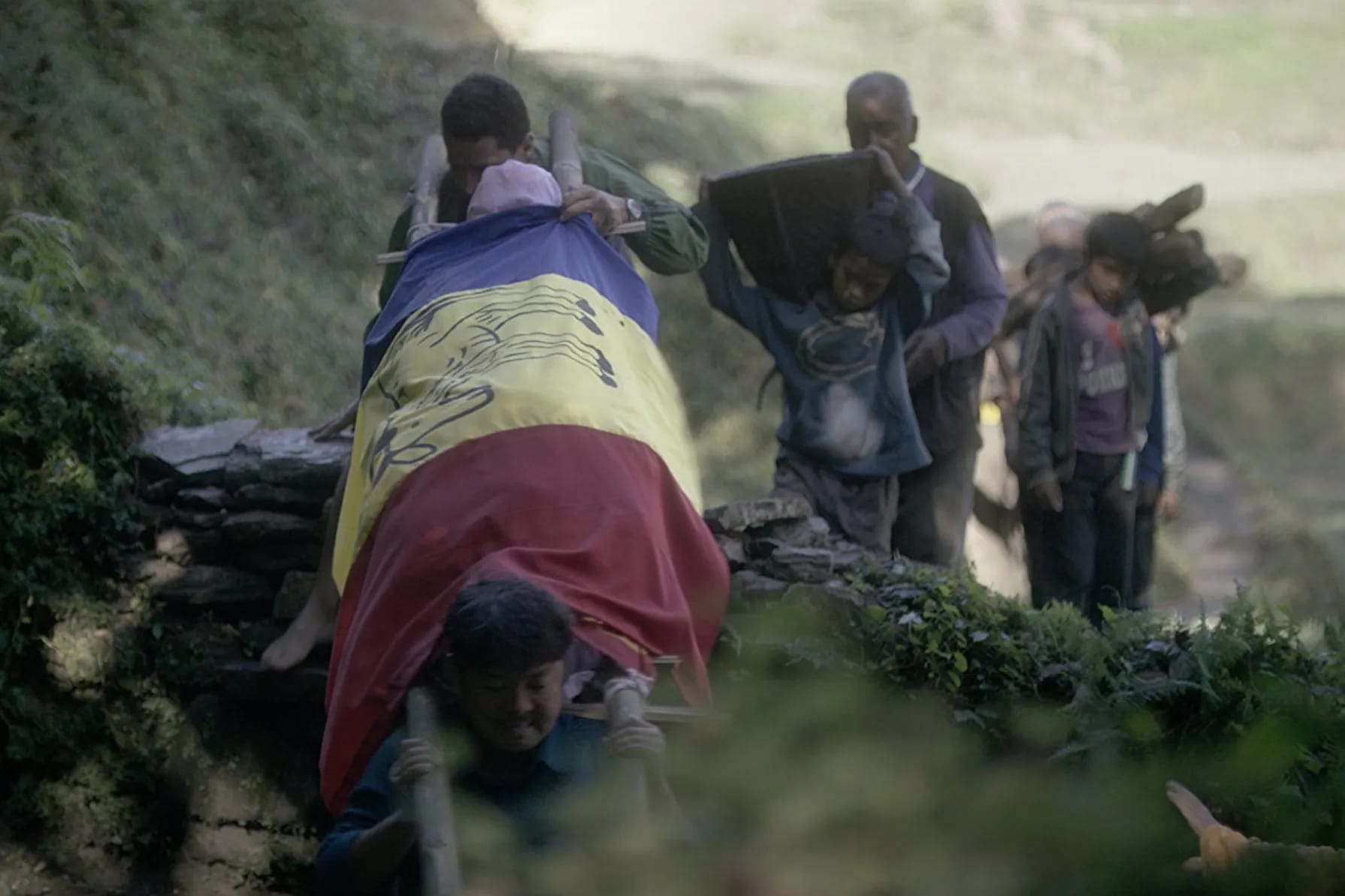
Elephants In The Fog, before it became the first Nepali film to win any award at Cannes, was already built as a co-production spanning France, Germany, Brazil and Norway.
France in particular has become one of the more reliable sources for this kind of cinema, largely through the CNC's Aide aux cinémas du monde, a fund that has specifically supported filmmakers from countries, Nepal among them, with little cinema infrastructure of their own.
None of this, to be clear, is charity. It is simply where the risk that a producer cannot absorb finds somewhere else to live, structured the way any co-production is structured, through minimum guarantees and sales agents and territories parcelled out long before a single frame is shot; financing that arrives with its own paperwork and its own expectations attached.
Berlin's World Cinema Fund, run jointly by the Berlinale and Germany's Federal Cultural Foundation since 2004, is another key financier, listing Nepal outright among the countries it considers to have “weak” film infrastructure and funds accordingly. Elephants In The Fog, co-produced by Underground Talkies in Kathmandu and Germany's Die Gesellschaft DGS, received €40,000 from the fund in 2023.
Rauniyar’s Pooja, Sir picked up €25,000 from the same fund a year later, along with €57,000 from the Norweigan Film Institute’s Sorfund. The sums are modest by festival standards, 10-15 projects a year, €30-60,000 each, but for a Nepali production budget they can be the difference between a film getting finished and a film getting shelved.
Elephants In The Fog found some audience here on its Nepal release, but nowhere near what commercial cinema draws, even with the marketing push behind it; thinner rooms than you’d expect for a film that had just made history. It has recently been released in France, and I would be genuinely surprised, if it does not do better there than it did at home. That gap, between the cinema that is quietly worth something and the cinema that gets seen at home, is the one that troubles me most, more than any of the numbers I have just given.
I watched it in a theatre here and found it beautiful in a way I hesitate to call extraordinary, a word I try not to reach for so easily, but something in it felt earned rather than borrowed, felt like it had been paid for in the right currency. I don't think it needs to be more than a start. Alongside it I would put White Sun, and Min Bahadur Bham’s Black Hen, which was the first Nepali film to screen at Venice, and an older film I keep returning to almost involuntarily, Numafung, a coming-of-age tale from 2001, which I consider close to a classic and think more people should watch.
What troubles me more than the financing, in the end, is the gaze a great deal of South Asian cinema, Nepali cinema included, has sometimes been made with, or made for: an outsider's eye, a Western eye, arranging our culture and our tradition the way one arranges a costume rather than a life someone is actually living, actually breathing inside of. International money does not automatically spare us this. It only makes the question harder to look away from.
Which raises a harder question than any I have asked so far, the question of what Nepali cinema would even look like, one I do not think has a clean answer, since a film is always, at bottom, a subjective thing, made by one person's eye and one person's patience. It remains a question worth asking anyway, without an answer waiting politely at the end of it.
There has also been restoration work done recently on older Nepali films, work that matters more than it might first appear to, since it becomes difficult to keep asking what this cinema is, if half of what it has already made is quietly disappearing, while we argue about what comes next. Part of what makes me optimistic is a sense, still early and fragile, of the language itself being decolonised, of the grammar we inherited being questioned rather than simply repeated out of habit.
This remains, in the end, a young cinema, young the way a language is young before its grammar has fully settled, before there is an agreed-upon way of telling a story that everyone working within it feels obligated to honour. I do not consider that a weakness so much as a permission to attempt things an older cinema has already, quietly, decided against, to be clumsy in ways that are really just honest, and precise in ways nobody taught it to be.
There is something genuinely poetic in watching a cinema work out its own sentence structure in real time, in public, one film after another, without yet knowing, and without needing to know, how the sentence will end.
Abishek Budhathoki

Nepal's Mainstream Film Industry Is Growing But Faces Multiple Challenges
Nepali mainstream cinema has long struggled under the shadow of both Hollywood and Bollywood, but in recent years, local films have been outperforming both at the box office.
Looking at the top ten local films of all time – nine have been released over the past five years. Social drama Purna Bahadur Ko Sarangi, produced by Seven Seas Cinema in 2024, is the highest-grossing Nepali film of all time with around $3m (NPR468.7m), followed by Dr. Kapil Rijal’s Gauthali, released this year, which grossed $1.7m (NPR259.5m) to become the second biggest film ever.
Purna Bahadur Ko Sarangi, directed by Saroj Poudel and starring Bijay Baral, tells the story of a musician from a marginalised community striving to provide a better future for his son, while Gauthali is a melodrama about a young woman who wants to study but is forced to marry young. Simran Khadka and Arun Chhetri play the eponymous heroine and her husband.
Other recent hits include romantic comedy drama franchises Kabaddi and Chhakka Panja, with Kabaddi 4: The Final Match (2022) the third highest-grossing film of all time with $1.4m (NPR214m) and Chhakka Panja 4 (2023) ranking sixth with around $1.1m (NPR173.5m). Overseas revenues of Nepali films have also been increasing in diaspora markets, including Australia, Dubai, Qatar and Malaysia, although usually only for titles that have been a big hit at home.
It’s a similar story in many other markets across Asia Pacific since the pandemic – local productions occasionally catch fire and rack up record-breaking numbers at the domestic box office, often benefitting from the reduced pipeline of Hollywood films. But a few big hits don't make a sustainable industry. Revenues are concentrated around just a few titles, while many releases fail to break even. Figures from Nepal’s Film Development Board (FDB) reveal that combined annual box office and market share for Nepali films fluctuate wildly from year to year.
And it’s still a relatively small market for a country with a population of around 30 million, more than Australia or Taiwan. Nepal’s overall box office was only around $17m (NPR2.7bn) from 3.78 million admissions in the Nepali year of 2081 (running April 2024 to April 2025), according to FDB figures.
FDB figures also reveal that the market has around 158 operating cinema halls with just over 41,000 seats. QFX Cinemas, owned by Nepal's TeamQuest, is the leading cinema operator with around 17 locations. Foreign investment in Nepal’s film and cultural industries is restricted, so Indian exhibitors such as PVR Inox, or international players like Cinepolis, are not present in the market.
Meanwhile, the industry faces a range of structural problems that will sound familiar in many film markets in the Global South: theatres give their best screening slots to Bollywood and Hollywood films; local streaming platforms are small and underdeveloped, with low levels of subscription revenue; labour regulations are non-existent, and there’s very little government support. The Film Development Board and the country’s Film Law (introduced in 1969) are both long overdue for a makeover.
Nepal does have a few film festivals, with Kathmandu International Mountain Film Festival (KIMFF) one of the longest-running, but none with the resources to build a cinematic ecosystem in the way that festivals and markets like Busan, Hong Kong and India’s Film Bazaar have in other parts of Asia. However, KIMFF does give a platform to Nepali cinema and runs the Kathmandu DocLab.
Overall, it's a market that is sorely in need of government funding and financial incentives to encourage private investment (whether local or foreign) to enter the industry. But it’s also a country that had GDP per capita of $1,548 this year, according to International Monetary Fund (IMF) figures, and has just experienced one of the worst flooding disasters in its modern history. Understandably, the government may have other priorities right now.
So what alternatives are there for film industries in this position, apart from sticking to tried-and-tested formulas for commercial cinema, or on the arthouse side, working with film organisations in India, Korea and Europe? Nepal has its own languages, culture and identity that deserve to be represented in domestically-produced films and shown proudly to the world. Is it possible to do that outside of the current twin tracks of diaspora releases or European funding and festivals? As always, Streamlined would be interested to hear your thoughts.
Liz Shackleton
IN THE TRADES:
AWARDS RACE:
Sabu’s ‘Arrested Memory’, Shu Qi’s ‘Girl’ lead Golden Horse Awards 2026 nominations
Northeast India’s ‘Angh’ Wins Toronto Platform Prize; Qualifies For Oscars Consideration
 Streamlined team
LAB & FUNDING NEWS:
Durban FilmMart To Present 36 Projects In Rescheduled October Edition
Red Sea Fund Backs 30 Asian & African Projects In 2026 Funding Cycles
Palestine Film Fund Selects Seven Projects For Second Funding Round 2026
El Gouna Film Festival Unveils 23 Feature Projects; Launches CineGouna Series
Korea boosts production support for 16 projects including Koji Fukada, Um Tae-hwa films
Africa’s Realness Institute selects four screenwriters for AuthenticA Series Lab
PRODUCTION NEWS:
‘Lollipop Chainsaw’: Cult Japanese Video Game Getting The Live Action Feature Treatment
Fatih Akin to shoot Louis de Bernieres’ adaptation ‘Birds Without Wings’ in Turkey in 2027
Korean Bestselling Thriller ‘The Kidnapping Day’ Set For Arabic-Language Movie Adaptation
CORPORATE:
Disney Seeking Next Big K-Pop Hit After Striking Ten-Project Deal With Kakao
CANCELLED:
CURATED:
Saudi Arabia’s Red Sea Film Festival Cancels 2026 Edition
May El-Toukhy’s 'Woman Unknown' Scores Top Prize At Politically Charged Venice
African Films 'Congo Boy' & 'Ben'Imana' Win Major Prizes At Pingyao Film Festival
Singapore film festival to open with ‘The Assassin(s)’, honours for Aamir Khan, Hirokazu Koreeda
Hawai’i Film Festival to Open With ‘The Navigator,’ Names ‘Drifter’ as Centerpiece
‘The Age Of Goodbyes’, ‘The Scar-Faced Cat’ to bookend Taipei Golden Horse Film Festival 2026
RELEASED:
‘The Assassin(s)’ Tops Korea’s Chuseok Holiday Box Office With 1.5 Million Admissions
SOLD:
Cannes Prize-Winning Nepal Oscar Entry ‘Elephants in the Fog’ Sells Wide for Best Friend Forever
Dogwoof acquires award-winning Gaza doc ‘NAZA’ for UK-Ireland
‘The Sea’ scores key European deals a year after sweeping Israeli awards
Watermelon Pictures Acquires ‘Thirteen in Gaza’ Out of TIFF
Dekanalog Takes North American Rights To Tan Siyou’s Festival Hit ‘Amoeba’
Chinese box office hit ‘Once Upon A Time In The Middle East’ lands North American distribution
Kurosawa Kiyoshi’s Cannes Title ‘The Samurai and the Prisoner’ Sells Wide for Charades
San Sebastian and Busan Title ‘In My Father’s Room’ Sells Wide for Bitters End
Finecut Scores Sales On Trio Of Titles Starring Members Of K-Pop Groups NCT, Fifty Fifty & The Boyz
CJ ENM Sells ‘Hotel Del Luna’, ‘Signal’ & Other Hit K-Dramas To CME Slovakia & Czech Channels
STREAMING UPDATES:
Audiences Flocking To Anime On Netflix At 10 Times The Rate Of Other Genres, Report Reveals
Streaming & Local Film Propel Major Asian Markets To $15B Content Spend This Year – MPA
‘Vivant’ Tops Asia Streaming Chart, First Japanese Drama to Lead, Report Finds
Singapore-South Korea Series ‘Collateral Romance’ Set at Mediacorp, Blintn
![Agent Kim Reactivated [Credit: SBS]](https://storage.ghost.io/c/f6/3b/f63bba50-4e07-4fdb-a685-47f18f3c5b84/content/images/size/w600/format/webp/2026/10/Agent-Kim-Reactivated.jpg)