Streamlined Guides: Japan Indie Producers - From 'Lost Land' To 'Nagi Notes'


In this third and final section of the Streamlined Guide to Japan’s Independent Producers we profile six more producers who represent a new generation in the sense that they’re working across borders, tapping into the international sales and festival circuit, and finding innovative methods of financing and distributing Japanese films.
The producers featured in this section are working, not only in Japan, but across the US, Canada, France, China, Taiwan, Indonesia, Malaysia and Myanmar, revealing the new international face of the Japanese film industry. See the links at the end of this report to read the first section, which explores Japan’s production landscape and indie pioneers, and the second section, which also profiles six groundbreaking producers.
As always, these guides are completely funded by readers so the information in the report has been researched independently of any financial support from advertisers and/or film agencies. Contact details are not included in the report, but paid subscribers can DM me to discuss the best way to approach listed companies, with Founding Member subscribers receiving priority on their queries.
Eric Nyari
Cineric Creative
Credits: Black Box Diaries, Instruments Of A Beating Heart, Happyend, Black Ox
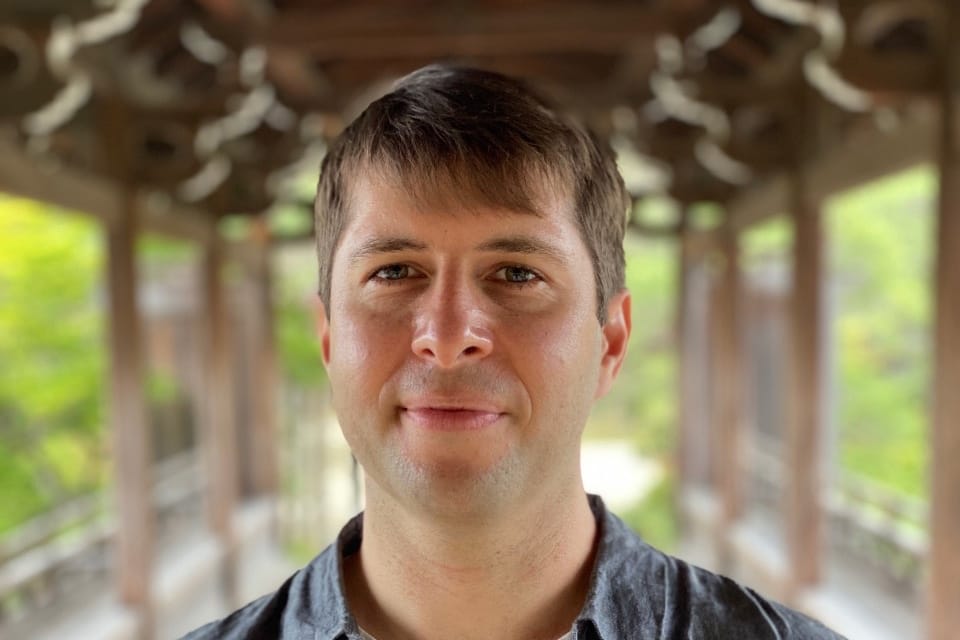
Based in Tokyo and New York, Eric Nyari has been working across narrative, documentary and restoration projects for more than a decade. In 2025, two of the documentaries he produced – Shiori Ito’s Black Box Diaries and Ema Ryan Yamazaki’s Instruments Of A Beating Heart – were nominated for Oscars, both historic firsts for Japanese films.
Black Box Diaries, based on Ito’s memoir about the sexual assault she suffered at the hands of a broadcasting executive, premiered at Sundance and was nominated for Best Documentary Feature at the Oscars, the first time ever for a Japanese film in that category. Instruments Of A Beating Heart, about a group of first grade students staging a performance at a Tokyo public elementary school, achieved the same milestone in the Best Documentary Short category in the same year.
In 2024, Nyari also produced Neo Sora’s narrative feature debut Happyend, a dystopian coming-of-age tale set in near future Tokyo, which premiered at Venice and won awards at the Asian Film Awards, Asia Pacific Film Awards and several festivals. Cineric Creative produced the film with Zakkubalan, the production outfit founded by Sora, Aiko Masubuchi and Albert Tholen; Alex C. Lo’s Cinema Inutile and Anthony Chen’s Giraffe Pictures, among other partners (see Aiko Masubachi’s profile for more on this film).
In the same year, Tetsuichiro Tsuta’s Black Ox, which Nyari produced with partners in the US, Japan and Taiwan, premiered at Tokyo International Film Festival and won the Young Firebird Award at Hong Kong International Film Festival, marking the first time a Japanese film had won the award. Around this time, Nyari was also a consulting producer on Akio Fujimoto's Lost Land (see Kazutaka Watanabe’s profile below for more on Lost Land).
Brought up in a New York film family – his father’s company Cineric works on film restoration – Nyari moved to Japan after college and started producing restorations of classic Japanese films, including titles from masters such as Kenji Mizoguchi, Yasujiro Ozu and Kon Ichikawa.
Through this work, he had the opportunity to meet internationally minded Japanese filmmakers, some of whom were moving between New York and Tokyo, and started producing independent Japanese films. Early works included Atsushi Ogata’s Cast Me If You Can (2010) and Yoshifumi Tsubota’s The Shell Collector (2016); as well as two films from Iranian filmmaker Amir Naderi – Japanese-language Cut (2011), which premiered in Venice’s Orizzonti section, and Italian-language Mountain (2016).
“Rather than produce through the production committee system, we found ways to realise projects through other methods – sometimes the US model supported by benefactors; sometimes international co-production mechanisms with soft money – and for each project we were just looking for a new model to realise it in the best way possible,” Nyari says.
A few years later he started working with Takeshi Fukunaga, producing his award-winning films Ainu Mosir (2020) and Ainu Puri (2024), both set among the indigenous Ainu people in northern Japan, and historical drama Mountain Woman (2022).
Crediting his Oscar-nominated wife Yamazaki for “getting me into documentaries” he also started producing docs, including Stephen Nomura Schible's Ryuichi Sakamoto: Coda (2017); Yoichiro Okutani’s Odoriko (2020), about the dying art of Japanese striptease, which won two awards at Cinema du Reel in 2021; and Ryuichi Sakamoto: Opus (2023). He also produced Yamazaki’s previous docs, including Monkey Business: The Adventures of Curious George's Creators (2017); Koshien: Japan's Field Of Dreams (2019), following a high school baseball team; and The Making Of A Japanese (2023), the feature-length starting point for Instruments Of A Beating Heart.
Regarding Happyend, he says: “When we went to Japanese companies we were told ‘we’ve waited so long for a filmmaker with talent like this, but you have to keep the budget under $150,000 and use famous cast’. After hearing that, we decided to set up an LLC in New York, went through the Sundance labs and gathered private investment from the US, Taiwan, Singapore and Thailand, along with some Japanese soft money. That was the only way to have complete freedom with the script, and cast exactly who we thought were best for the roles.”
Black Box Diaries was supported by Los Angeles-based International Documentary Association (IDA) and was also able to tap into high-net-worth individuals in the US, which Nyari observes is easier than in East Asia where there’s less appetite for film investing: “We had one significant private donor in the US who cares about these important issues of sexual violence and gender equality.”
Black Ox was co-produced with Cinema Inutile, Shozo Ichiyama’s Fourier Films and Taiwanese producer Huang Yin-hu’s Moolin Films. The project received support from both Taiwan Creative Content Agency (TAICCA) and Taipei Film Fund. Set in Japan, the black-and-white, dialogue-free film stars Taiwan’s Lee Kang-sheng as a hunter-gatherer being assimilated into the “Japanese” way of life during the Meiji Restoration. Ryuichi Sakamoto provided music for the film.
![Extraordinary Attorney Woo [Photo: ASTORY]](https://storage.ghost.io/c/f6/3b/f63bba50-4e07-4fdb-a685-47f18f3c5b84/content/images/size/w600/format/webp/2026/10/Extraordinay-Attorney-Woo.jpg)