BUSAN 2026: Asian Era Of Cooperation; AI Backtrack; Award Winners

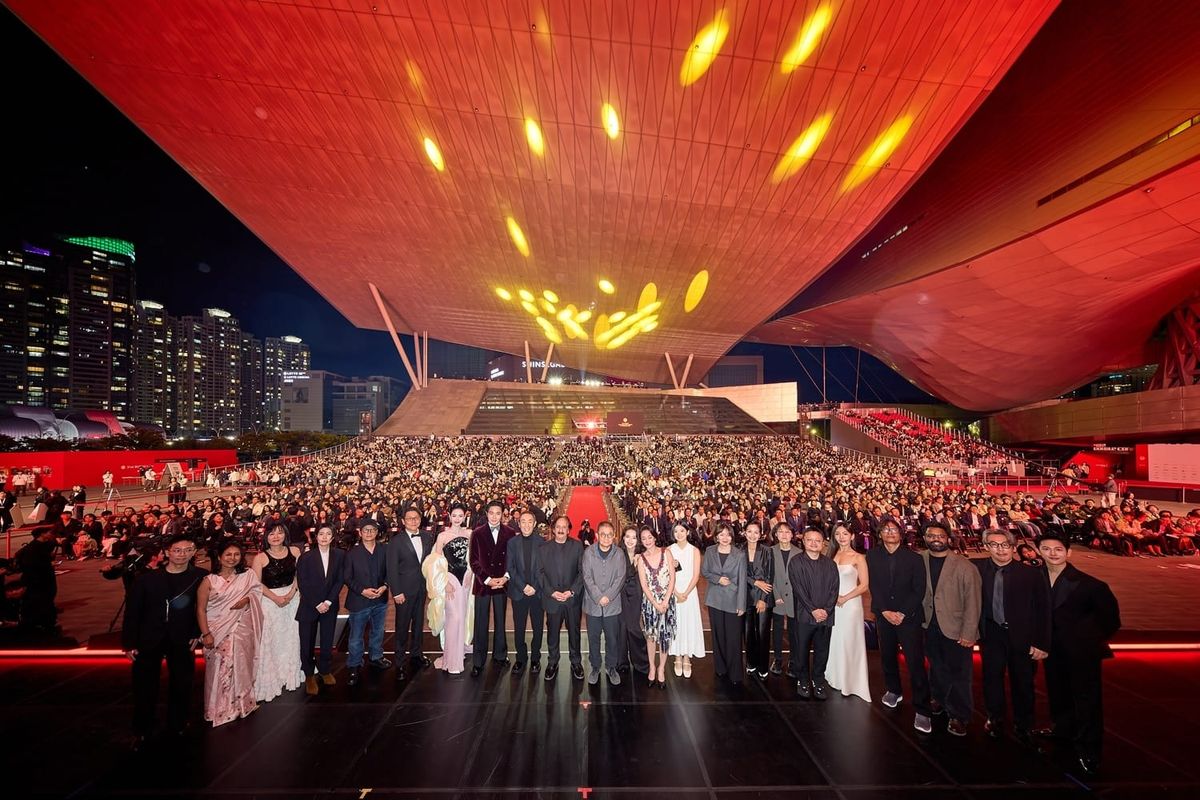
This edition of Streamlined is looking at Busan International Film Festival, and its industry platform Asian Contents & Film Market (ACFM), which both wrapped last week. Two talking points stood out this year: the growing levels of cooperation between Asian filmmaker countries, as conditions across the region become more difficult to navigate; and the messaging around Artificial Intelligence, which has shifted since the start of the year. We'll end with a few words on the Busan Best Film Award.
Busan is definitely growing in stature; becoming one of just six festivals around the globe that offers a direct route to the Oscars for the top award-winning film; and while I’m personally not convinced about the importance of an A-list rating from FIAPF, the classification certainly doesn’t hurt. The new competition section feels like it's still finding its feet, but is starting to draw more attention, and the Vision – Asia and Vision – Korea sections both had some strong films. ACFM is also working hard to position Busan as a key regional platform at a time when the industry worldwide is going through unprecedented disruption. More on the market below..
How Co-Production Continues To Reshape Asia's Film Industries
ACFM had a packed programme of panels, labs and pitching events, across all genres, formats and new technologies. But looking at the trades, the volume of news about production starts, pickups and sales was very thin. This is a feature of most film and TV markets these days and reflects a reality that ACFM and other events are adapting to by becoming a platform for information exchange, networking and demonstrations of new tech.
It also felt like some usual market attendees had drifted over to MIPCOM, presumably to check out business opportunities in Europe, but where they would have found the European biz fretting over the fallout from recent mega-mergers (Skydance, Banijay et al) and figuring out how to work with YouTube, microdramas and the creator economy. We live in interesting times and ironically physical markets are more important than ever if only for the human solidarity and to figure out what is going on.
When there was news at ACFM, it was mostly about cross-border co-production agreements and alliances. Korea’s Lotte and Japan’s Toei announced that they’re working together to co-produce films in Vietnam, where Lotte has a long-established presence, and Toei also announced a co-production deal with Thailand’s 13 Studio for Thai horror The Hanging Balloons, based on a Japanese manga.
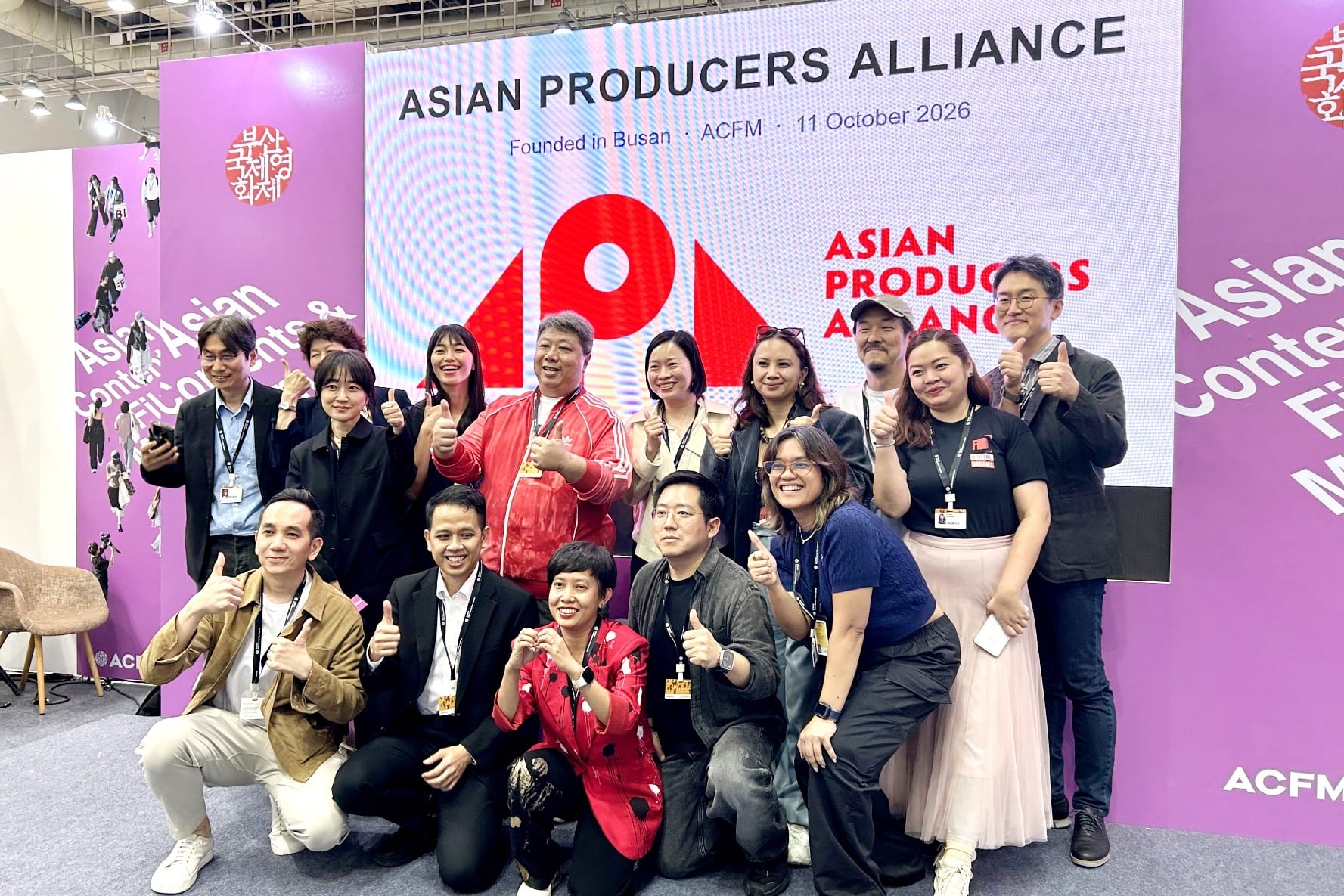
Elsewhere, the Producers Guild of Korea (PGK) signed MOUs with Italy’s CNA Cinema e Audiovisivo and the Sakha Filmmakers Association, with the latter representing the film industry in the Sakha Republic, in the far east of Russia, which makes content in the Yakut language (and as they were keen to point out, are culturally Asian, not European, although not many people understand that). Significantly, the PGK also partnered with organisations in Indonesia, Philippines, Hong Kong and Taiwan to launch the Asian Producers Alliance (APA).
Co-production between Asian nations is a trend that has waxed and waned over the past few decades, and as Asia is not supported by regional subsidy schemes to the extent that Europe is, the alliances have mostly been along lines of cultural similarity or geographical proximity. Now, with capital and distribution opportunities for feature films declining; streamers commissioning less content, and new technology disrupting traditional business models, producers across the region are trying to work together to pool resources and boost distribution.
Some governments in the region are supporting these efforts with co-production funds and other support, but as we’ve discussed in the Streamlined Guides (see our guides on Asian co-pro funds here & here and on Japan indies here) this support can be inconsistent and tricky to navigate.
APA and the Asian Film Alliance Network (AFAN), which brings together film commissions across the region, have an opportunity to help shape policy, facilitate co-production and protect independent producers’ intellectual property.
One noteworthy feature of the recent co-production boom is that it’s not just being driven by indie producers. Due to declining box office and shrinking capital, even major studios in big markets like Japan and South Korea are tapping into government funds and starting to explore genuine co-production, not just selling remake rights.
As a result, indie producers may need to fight harder than ever to secure access to funding and valuable IP, and to hold on to those rights, in the way that European indies have fought to do. And again, none of this is possible without supportive government policy. Streamlined Guides is ending the year with an update on government policy in Europe, Canada, Australia etc, and how that is impacting indie producers in those territories.
Also, if you haven’t already, please read Jaden Jaebum Park’s series of Streamlined Guides about the Korean content industry and what producers need to consider when negotiating with international platforms. As he points out, holding on to rights is one thing, it’s knowing what to do with those rights that makes a difference.
New Messaging On AI Filmmaking: We Still Need Humans
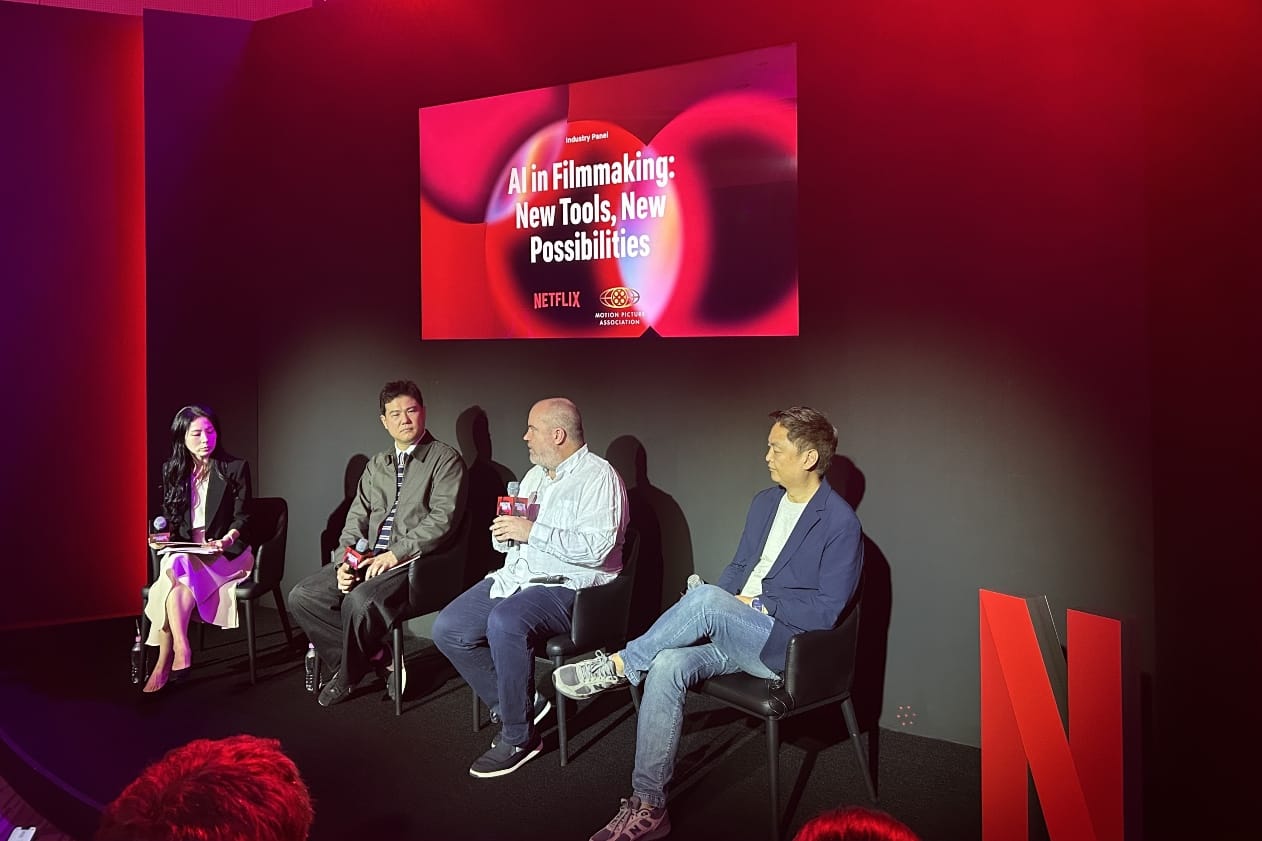
Streamlined attended two panels about AI filmmaking in Busan – one hosted by Netflix and the Motion Picture Association, and the other by Kling AI – and was struck by how the messaging has changed since last year when all anyone could talk about was how much money this technology could save producers, and how it was going to democratise the production process.
While cost savings were of course mentioned on both panels there was also an effort to reassure the industry that humans will not (or should not?) be completely eliminated from production.
It’s difficult to tell whether those sentiments are genuine, or driven by the backlash against AI filmmaking, which we’re mostly seeing in the content industries in North America and Europe. But we’re hearing a lot more about “assisted AI” and “hybrid AI” these days than we are about completely replacing actors and crew members.
On the Netflix panel, Sung Q Lee, Netflix's APAC Senior Director, Production, said the streamer was using AI for pre-visualisation, editing and VFX, but stressed that the “human touch is always critical and necessary”. Weta FX’s chief technology officer, Kimball Thurston, talked about some of the limitations of the current technology and how he wished tech companies would collaborate more closely with creatives to fill the gaps.
Speaking on the Kling AI panel, Korean director Kim Sung-soo (12.12: The Day), who is making an AI film Worm Train, inspired by Franz Kafka’s short story Metamorphosis, said we still need humans to produce work that is “cinematic”, or in other words good enough to be shown on a big screen: “The value of images still comes from human intervention.”
Harry Hyun, CEO of Korea’s MooAm (Crypto Man, Genfluencer), said that without film professionals trained the old-fashioned way (cinematographers, art directors etc) you end up with AI-generated images that are flat and look like “cookie cutter deliverables”.
What all these panels reveal is that the AI narrative is changing almost as fast as new models are being issued, although at this point it's difficult to figure out who is controlling the spin. The Netflix panel also featured Kang Yun-sung, director of Korea’s first AI feature Run To The West, and you can read more about how the Korean content industry is embracing this technology, and where it may want to rethink a few things, in Part Four of Jaden Jaebum Park's K-content series, to be published on October 23.
At this stage of AI development, it does appear that there’s more of a backlash in North America and Europe, while China, India and the rest of Asia have been more receptive. But it’s also the case that the pushback in the West has come mostly from filmmakers, writers, actors, and other film workers, and the guilds that represent them, while the powers that be in North America – Netflix and the legacy studios – attempt to reassure them about their use of AI.
In Asia, the smaller powers have less of a voice, so if there are major concerns, we’re unlikely to hear so much about them. There are no guilds in Asia that can fight for their members on the scale that SAG and WGA did for US actors and writers. In India, lawsuits were flying back and forth between Eros International and producer Aanand L. Rai over the studio’s use of AI to change the ending of Rai’s 2013 feature Raanjhanaa. But copyright is not so strongly enforced to protect the small guys across this continent, and the legislation that does exist has usually not been updated for many years.
What will be interesting to follow as this technology develops is whether it truly turns out to be democratising – in terms of giving smaller filmmaking companies and individuals the chance to compete with the powers that be on a level playing field – or whether it just hands those powers new tools to beat them into submission.
Busan Best Film Winner: Why We Need Festivals & Awards
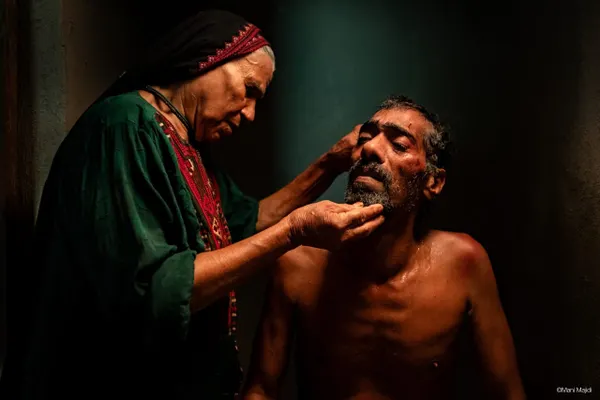
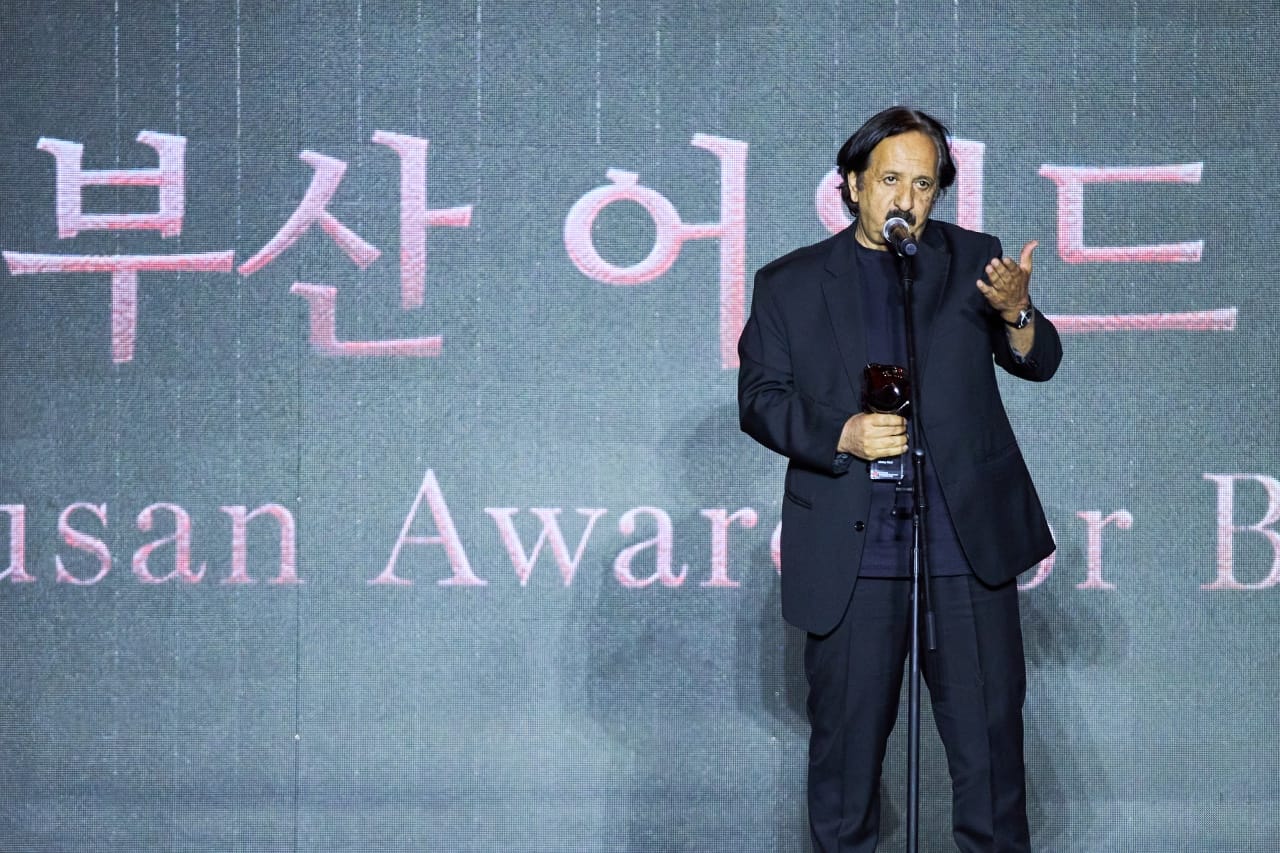
Considering that it was likely the drama over an Iranian film that prompted the Oscars to bring in rule changes for its Best International Feature category earlier this year, it felt appropriate that the first film to be fast-tracked to the Oscars by winning the Best Film Award in Busan is also Iranian.
Last year, Iranian director Jafar Panahi, who was being honoured at the festival as Asian Filmmaker of the Year, called on the Academy to bypass repressive national governments and find alternative ways for independent filmmakers to submit their films. Panahi’s It Was Just An Accident was submitted as France’s entry for the 2026 Oscars, as there was no chance the Iranian government would select the film. The Academy listened, and Busan became one of six festivals globally through which the top prize winner can be submitted outside of the decision of a national government selection committee.
As a result, Majid Majidi’s Midday Meal qualifies for submission this year, in addition to the Iranian government’s selection of Land Of Angels from Babak Khajeh Pasha. Other films that qualify through the festival route include To Hold A Mountain, a documentary from Montenegro directed by Biljana Tutorov and Petar Glomazić, which won the World Cinema Grand Jury Prize in Sundance; Turkish filmmaker İlker Çatak’s Yellow Letters, which took the Berlinale Golden Bear; Christian Mungiu's Cannes Palme d’Or winner Fjord; May El-Toukhy’s Venice Golden Lion winner Woman Unknown, and Theja Rio’s Angh, a film set among an indigenous community in Northeast India that won the Platform prize in Toronto.
Of course, these films still have to be actually submitted, and there may be other qualifying rules on issues like theatrical release to adhere to (Streamlined is contacting the Academy to doublecheck these rules). Last year, Thai multiple award winner A Useful Ghost, which was selected by Thailand’s national committee, had to drop out of the race because the paperwork wasn’t filed in time. Then of course, more than 90 films are usually submitted for the Best International Feature category, and campaign budgets are beyond the reach of most entries.
So while the Academy may be listening and trying to make the Oscars more international, Streamlined still believes that Asia needs an awards ceremony, physically based in the region, that provides an alternative to what is basically an American show. But we're also being realistic about the fact that this is unlikely to happen any time soon. The Asian Film Awards didn’t even take place this year, ostensibly due to the Tai Po fire tragedy in Hong Kong, although it's likely that the fallout between China and Japan derailed the event, and political spats between the three major powers in North Asia are going to last a lot longer than any awards ceremony.
But we can take comfort from what Asia does have – awards from festivals, several of which are growing in international stature; ceremonies like Taiwan’s Golden Horse Awards, Hong Kong Film Awards, Japan Academy Film Prize, Korea’s Blue Dragons and Grand Bells, the Asia Pacific Screen Awards in Australia, Singapore’s Silver Screen Awards...
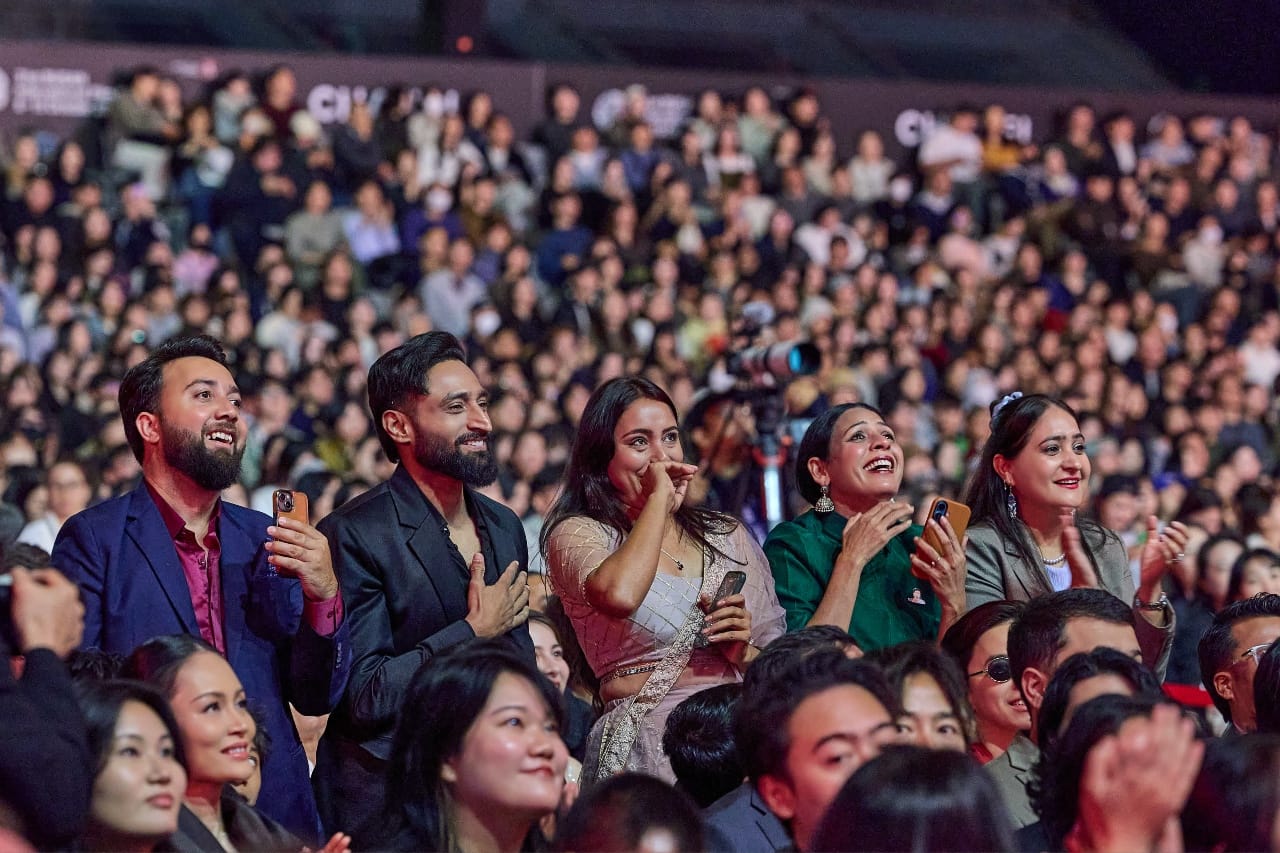
More than ever in this streaming age, we need pathways towards recognition and discovery, and we should celebrate the ones we already have. One of the most heartening moments of Busan for me was to see Indian filmmaker Shashank Walia win the New Currents Award for Birds In The Dark, a film addressing issues of caste, class and sexuality in the macho borderlands of Punjab; an impressive debut that as the festival closed still didn't have any international representation. This image below of the film’s cast and crew at the awards ceremony sums up why festivals are so important. Filmmaking is about creating dreams, often overcoming insuperable odds to do so, and without recognition and discovery, there's not much incentive to dream.
IN THE TRADES:
AWARDS SEASON:
 Streamlined team

LAB & FUNDING NEWS:
Marrakech Atlas Workshops Reveals Line-up; Kleber Mendonça Filho Set As Patron
Indonesia’s JAFF Market Selects 21 Projects & IPs, Including Boo Junfeng’s ‘Trinity’
‘A Chronicle Of Minor Things’ & ‘Goldfish’ Among Award Winners At Busan’s Asian Project Market
German-Turkish CoPro Fund Announces Support For Seven Projects In 2026
Australian producers step up calls for removal of 20% cap on key tax rebate
Screen Australia Awards $11.8m In Funding To 75 Narrative Projects
Screen Australia Announces $4m In Documentary Funding
PRODUCTION NEWS:
Philippines Launches Two-Track System For International Co-production Fund
Five Organizations Launch Asian Producers Alliance In Busan Market
Sakha Filmmakers Association & Producers Guild of Korea Pact For Co-Productions
Korea’s Lotte partners with Japan’s Toei on push into Vietnamese films
Showbox launches Yeon Sang-ho’s Devotion’ and ‘Exorcism Chronicles’ sequel at ACFM
Hive Filmworks boards first non-Korean film with Japan’s ‘Wandance’
Taiwan’s Tsai Ming Liang filming next ‘Walker’ in Jeonju
Vietnam’s Mockingbird Launches Horror Duo & Comedy Drama ‘The Happiest Cell’ At Busan’s ACFM
Thailand’s 13 Studio, Japan’s Toei team to adapt manga horror ‘The Hanging Balloons’
Malaysian star Lee Sinje’s directing debut ‘Wanita’ lands at Busan market with Applause
CORPORATE:
Disney Appoints Carol Choi As Asia Pacific President Following Luke Kang’s Retirement
CANCELLED:
Korean film industry rallies around ‘The Assassin(s)’ team after historical inaccuracy claims
CURATED:
Iranian Director Majid Majidi’s ‘Midday Meal’ Scoops Busan Best Film Award
Doha Film Festival Unveils 2026 International Feature Competition Lineup
IDFA unveils full 2026 lineup with Myanmar resistance doc ‘White Tiger Column’ as opening film
‘Vintage Violence’ set as Singapore film festival’s first closing film since 2014
RELEASED:
Neon boards Gaza documentary ‘NAZA’
MBC Studios thriller ‘Traveller’s Hell’ readies long-awaited release
SOLD:
Watermelon Pictures Acquires North American Distribution Rights To Sara Ishaq’s ‘The Station’
Vietnam’s V Studios Seals Multiple Deals On ‘Red Woman’ Including Sales To North America & Japan
Vietnam Oscar pick ‘Spirit Guardians’ lands multi-territory distribution deal including US
Landmark Tibetan drama ‘Linka Linka’ lands distribution in France, UK, Asia
Chinese box office leader ‘Traces Of Justice’ lands UK-Ireland distribution
Paradise City sinks deals on Busan-bound Cannes title ‘Titanic Ocean’
STREAMING UPDATES:
Disney+ Opens Supernatural Thriller Series ‘Night Tales Club’ In Japan; Watch The Teaser
Prime Video Adds Sony LIV To Indian Offer
MBC Group & CJ ENM Launch Dedicated K-Content Space On MENA Streamer MBC Shahid
Indian Streamer JioHotstar Enters Middle East and North Africa Through Starzplay Partnership