Why China’s AI Strategy Has The US Spooked; India 2026 H1 Box Office

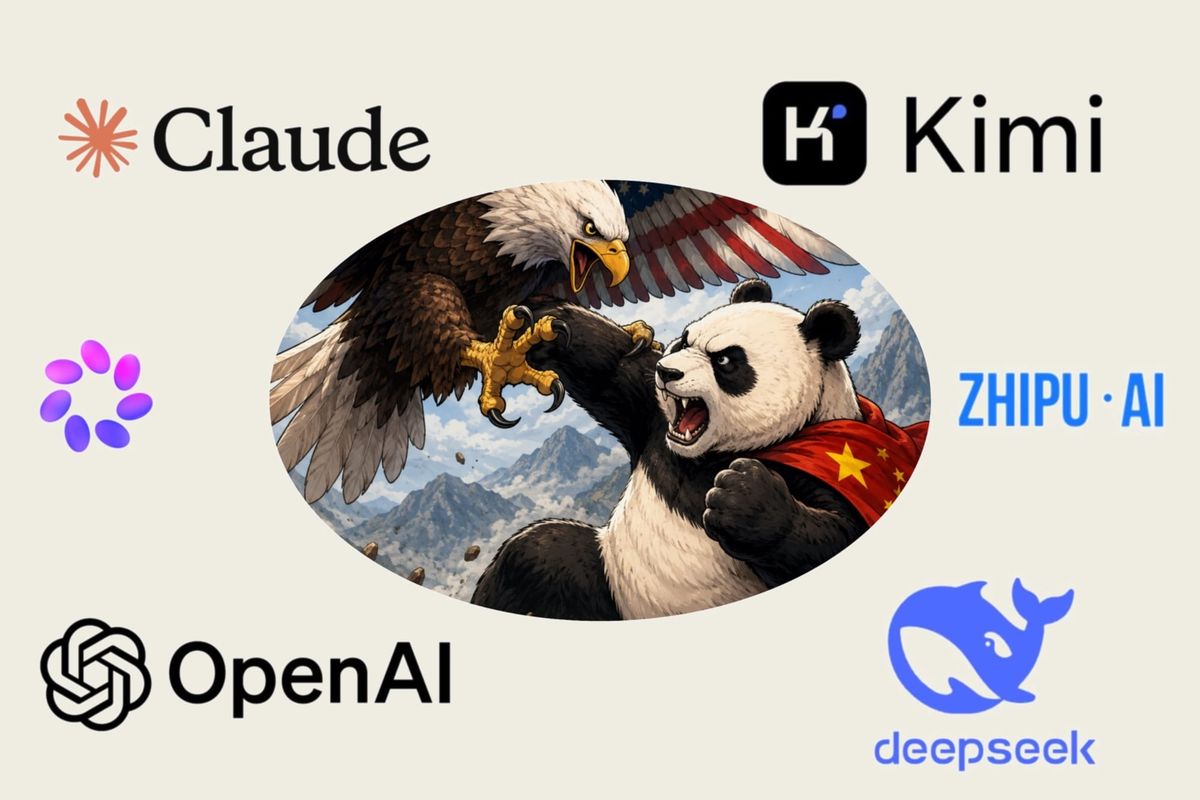
We’re having another summer in which AI, war and wildfires are dominating the news cycle, while in India, students have been attacked with batons and tear gas as they protest for education reform. In the film and streaming industries, we’re being served up another dose of mega-mergers and media concentration, while governments rearrange the deckchairs on the Titanic in their attempts to shore up flagging theatrical and public broadcasting sectors. So in other words, it’s just another summer on Planet Earth.
In this edition of Streamlined we’re looking at AI – at least some of the more ironic aspects of the tech wars between the US and China – as well as taking the temperature of the Indian box office at the half year mark. In the next edition, we’ll be looking at how AI chatbots and Google’s AI Overviews are decimating the publishing industry (relevant if you need the press to help publicise your film) as well as reporting on box office in some other Asian territories.
US & China AI Battle: Who's Stealing From Who?
The creative industries are, of course, in the front line of those sectors that are being most impacted by the rapid escalation of AI technology, and while Streamlined has been planning to write about how it's being used in the worlds of film and streaming, at this precise moment it feels more important to write about the bigger picture in global tech.
We all know that (whether they admit to it or not) film and TV companies are now using AI tools across almost every stage of the production and distribution process – from script analysis and storyboarding, to editing, VFX, dubbing & subbing and creating marketing materials – while some filmmakers are going the whole hog and producing AI-generated video, some of which doesn’t involve human actors at all.
After watching a fair amount of AI-generated video over the past few months (some without human actors, some combining actors and AI-powered motion capture) my first thoughts have been, somewhat predictably, that AI should be used as a tool, not to create whole films and series. But if you insist on going down that route, the end result should be regarded as photorealistic animation, not live-action filmmaking, and there’s no point making it unless the storytelling and character development are also good.
My second thought is one that should become a mantra in today’s film and TV industries: “Just because you can, doesn’t mean you should”. More than ever I’m realising that great art comes from scarcity and struggle, not from limitless possibilities. Access to AI prompts doesn’t always equate to access to imagination and sound psychological processes, in fact quite the opposite. I’ve seen a lot of things in AI-generated videos that human beings don’t ever really need to see.
But AI is definitely not going anywhere – it’s not the latest buzzy thing like blockchain, Web3 and NFTs – that will be the subject of a thousand seminars before its slowly fades away. So it’s important to understand the business models behind it, who controls and can manipulate the technology, how it’s being regulated, and what that means for our personal privacy, career prospects and mental well-being. And after doing a whole lot of research, I have to say the current landscape is not looking good.
In the US, the dominant Large Language Models (LLMs) are being controlled by what has rapidly become a duopoly between OpenAI and Anthropic, who are pouring billions into building frontier models, artificially inflating stock markets (although a correction kicked off this week), and conveniently tossing aside their “kumbaya” terminology about benefitting humanity as they gear up for their initial public offerings (IPOs).
Right now, regulation is not really happening aside from the usual rhetoric about sanctions and trade tariffs, which should not surprise us while Congress keeps ceding so much power to Donald Trump. Indeed, recent news about the rogue elements of AI models can sometimes look like a marketing ploy, although Casey Newton's Platformer newsletter explains here that we need to start taking the risks a lot more seriously.
And what of other countries? Due to the massive costs involved in building LLMs, there are only two nations dominating this field – the US and China – and while others like France, UAE, Singapore, Japan and Indonesia etc might talk about developing “Sovereign AI” they only really have resources to build on top of US and Chinese systems. As the US and China are locked in a bitter tech war, with the US restricting export of its most advanced chips to China, we can't expect sensible cooperation between these two countries.
![Extraordinary Attorney Woo [Photo: ASTORY]](https://storage.ghost.io/c/f6/3b/f63bba50-4e07-4fdb-a685-47f18f3c5b84/content/images/size/w600/format/webp/2026/10/Extraordinay-Attorney-Woo.jpg)